
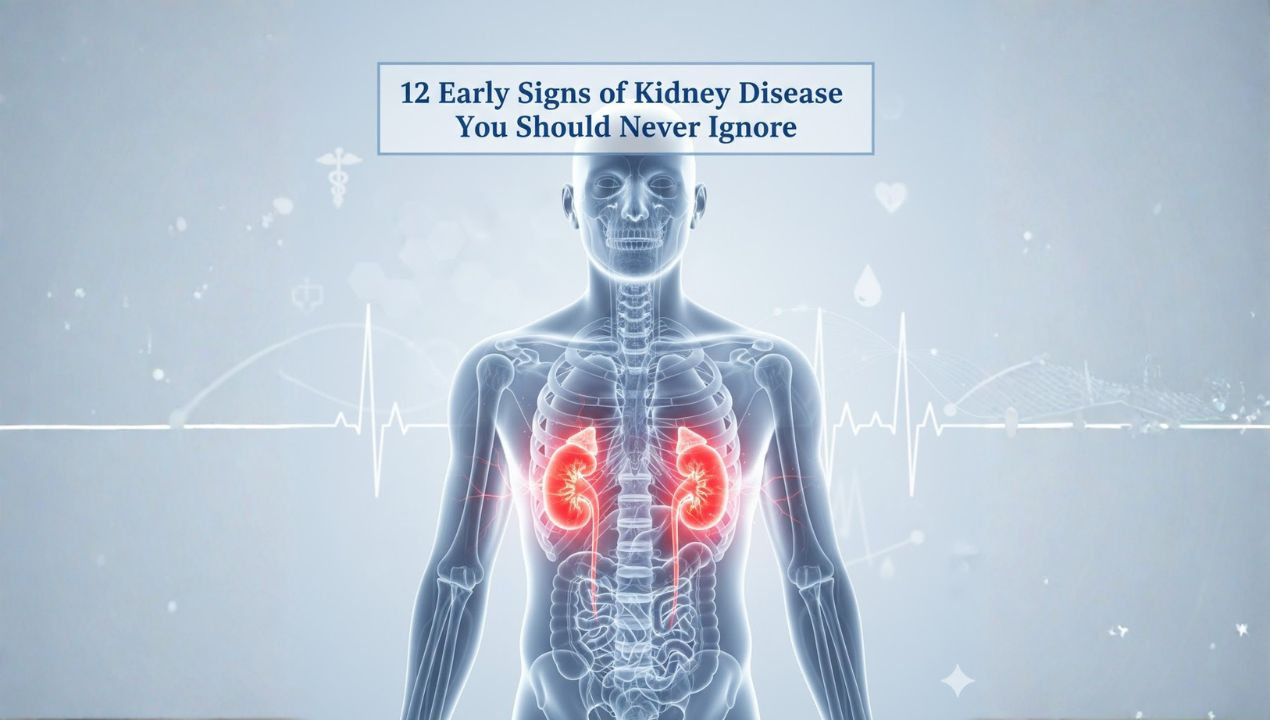
Kidney disease often develops silently, showing only subtle warnings at first. Understanding the early signs of kidney disease can literally save lives. Every year, millions of people unknowingly walk around with a ticking time bomb inside their bodies — a pair of kidneys quietly struggling to survive. These two small, bean-shaped organs are among the most hardworking filters of the human body, cleansing around 50 gallons of blood every single day. Yet, when they start failing, the early warning signs are often so subtle that even doctors may overlook them until the damage becomes irreversible.
- Constant Fatigue and Weakness
- Changes in Urination Patterns
- Shortness of Breath
- Nausea and Vomiting
- Persistent Itching
- Metallic Taste or Ammonia Breath
- Muscle Cramps and Spasms
- Brain Fog and Poor Concentration
- Puffiness Around the Eyes
- High Blood Pressure That Won’t Go Down
- Dry and Flaky Skin
- Why Most People Miss These Signs
- Early Detection: Two Simple Tests That Can Save Lives
- ❓ Frequently Asked Questions
- Conclusion: Listening to the Body’s Whispers
According to the National Kidney Foundation, more than 37 million Americans live with some form of kidney disease — and over 90% of them don’t even know it. The same story repeats worldwide: silent symptoms, slow damage, and late diagnosis.
So what are the hidden signals the body sends when the kidneys begin to falter? Here are 12 early warning signs that most people mistake for aging, fatigue, or stress — but could actually point toward the early stages of chronic kidney disease (CKD).
Constant Fatigue and Weakness
When the kidneys start to fail, one of the first signs is a deep, unexplained tiredness. People sleep a full night and still wake up feeling drained, as if their energy has been stolen overnight.
Medically, this happens because damaged kidneys produce less of a hormone called erythropoietin, which stimulates red blood cell production. Without enough red blood cells, oxygen delivery to muscles and the brain decreases — leading to anemia, persistent fatigue, and a sense of mental fog.
In studies published in the American Journal of Kidney Diseases, over 60% of CKD patients reported chronic anemia as an early symptom.
2. Swelling in Feet and Ankles
That tight feeling in the shoes or deep sock marks around the ankles after a long day — many dismiss it as a sign of standing too long or eating too much salt. But in reality, it could be a red flag for fluid retention caused by kidney malfunction.
Healthy kidneys maintain a delicate balance of sodium and water. When they weaken, excess fluid escapes into tissues, causing swelling (edema) — typically starting in the feet, ankles, or legs, and sometimes progressing to the hands and face.
Changes in Urination Patterns
One of the clearest yet most ignored signs of kidney trouble lies in the toilet bowl. Changes in urine color, frequency, or appearance — especially foamy or bubbly urine — can indicate that protein is leaking from the blood into the urine, a condition called proteinuria.
Another symptom is nocturia, where individuals wake up multiple times at night to urinate. Healthy kidneys filter waste efficiently, but as they weaken, the filtering mechanism fails, causing abnormal urination patterns.
Shortness of Breath
Climbing a short flight of stairs or even light activity leaves some people gasping for air. While it’s easy to blame heart or lung problems, kidney dysfunction can be the hidden cause.
Two mechanisms are responsible:
First, anemia (due to reduced red blood cells) limits oxygen supply.
Second, excess fluid buildup can flood the lungs, making it hard to breathe — a phenomenon sometimes described by patients as “drowning from within.”
A large study in the American Journal of Kidney Diseases confirmed that shortness of breath is one of the most common systemic symptoms of CKD.
Nausea and Vomiting
Persistent nausea, loss of appetite, or aversion to once-favorite foods can point to uremia — a buildup of toxins in the bloodstream caused by failing kidneys. These toxins irritate the stomach and disrupt brain centers that control hunger, leading to vomiting and a metallic taste in the mouth.
Left unchecked, uremia can cause severe weight loss and malnutrition over time.
Persistent Itching
A type of itching that feels like it comes from “under the skin” rather than the surface is a hallmark of advanced kidney disease. It’s not a typical dry-skin itch; it’s a deep, burning irritation triggered by a buildup of phosphorus and urea in the blood.
Research in Clinical Nephrology suggests that up to 90% of people with late-stage kidney disease experience persistent, body-wide itching that doesn’t respond to lotions or antihistamines.
Metallic Taste or Ammonia Breath
When kidneys can’t effectively remove waste, uremic toxins accumulate and alter the sense of taste and smell. People often describe a metallic or ammonia-like taste in their mouth — as if chewing on metal coins.
This symptom often pairs with bad breath that smells like ammonia or urine. Together, these signs indicate that the blood is becoming chemically imbalanced, affecting oral and digestive health.
Muscle Cramps and Spasms
Frequent leg cramps or painful muscle contractions — even at rest — can signal electrolyte imbalance. Kidneys are responsible for maintaining proper levels of sodium, potassium, calcium, and magnesium.
When this balance breaks, muscles misfire, causing sharp cramps, twitching, or stiffness, particularly in the legs and feet.
Brain Fog and Poor Concentration
Entering a room and forgetting why, reading the same line repeatedly without comprehension — these are not always signs of stress. The kidneys’ inability to remove toxins leads to uremic encephalopathy, where waste products cross into the brain and interfere with its function.
As a result, individuals may experience confusion, memory problems, and difficulty focusing, symptoms collectively known as brain fog.
Puffiness Around the Eyes
The thin skin around the eyes often reveals the earliest sign of protein leakage. Puffy or swollen eyelids — especially noticeable in the morning — indicate that essential proteins like albumin are escaping into the urine instead of staying in the bloodstream.
This disrupts the body’s fluid balance, causing mild but persistent swelling around the eyes.
High Blood Pressure That Won’t Go Down
Kidneys and blood pressure are deeply interconnected. When blood pressure rises uncontrollably, it can damage kidney vessels; in turn, damaged kidneys raise blood pressure further — creating a vicious cycle.
This happens because failing kidneys produce excess renin, a hormone that causes blood vessels to constrict and retain sodium and water, leading to hypertension resistant to medication.
Dry and Flaky Skin
While often dismissed as a cosmetic problem, persistently dry or itchy skin can signal mineral and vitamin imbalances linked to kidney dysfunction.
Healthy kidneys regulate levels of calcium, phosphorus, and vitamin D — all vital for skin elasticity and hydration. As this balance deteriorates, skin becomes dull, rough, and increasingly flaky despite moisturizing or hydration efforts.
Why Most People Miss These Signs
The greatest danger of kidney disease lies not in its pain but in its silence. Most symptoms progress slowly and mimic everyday problems like stress, aging, or dehydration. By the time clear signs appear, up to 70–80% of kidney function may already be lost.
This is why regular checkups and awareness matter more than ever.
Early Detection: Two Simple Tests That Can Save Lives
Doctors recommend two basic tests to detect kidney problems early:
Blood Test (Creatinine and GFR): Measures how well kidneys are filtering waste from the blood.
Urine Test (Protein Check): Detects abnormal protein leakage — often the first sign of kidney damage.
These simple tests can identify chronic kidney disease (CKD) long before it becomes life-threatening. Early intervention with diet changes, hydration, and medical supervision can reverse or slow down kidney damage dramatically.
❓ Frequently Asked Questions
What are the first signs of kidney disease?
The earliest signs often include fatigue, swollen ankles, puffiness around the eyes, changes in urination, and unexplained weakness. Many people also experience dry skin and muscle cramps as kidney function declines.
How do I know if my kidneys are healthy?
You can assess kidney health with two simple tests — a blood test for creatinine (to calculate eGFR) and a urine test for protein levels. Normal results mean your kidneys are filtering waste effectively.
Can kidney disease be detected early?
Yes. Early-stage kidney disease can be detected through routine blood and urine tests even before symptoms appear. Regular checkups are especially important for people with diabetes, high blood pressure, or a family history of kidney problems.
What causes kidney disease?
The two leading causes are diabetes and high blood pressure, which together account for about 70% of kidney failure cases. Other causes include chronic dehydration, overuse of painkillers (NSAIDs), infections, and autoimmune conditions.
What are the warning signs that my kidneys are failing?
Common warning signs include:
- Persistent swelling in the feet or hands
- Shortness of breath
- Metallic taste in the mouth
- Nausea or vomiting
- Unexplained tiredness
- Itchy or dry skin
These indicate waste is building up in the body — a hallmark of kidney failure.
Can kidney disease cause back pain?
Yes. While not all kidney problems cause pain, infections or kidney stones can lead to sharp or dull pain in the lower back, usually just below the ribs on one or both sides.
Is kidney disease reversible?
In its early stages, kidney damage can often be slowed or even stopped with proper treatment, diet changes, blood pressure control, and hydration. However, advanced kidney failure is usually irreversible and may require dialysis or transplant.
How can I prevent kidney disease naturally?
To maintain healthy kidneys:
- Drink adequate water daily
- Limit salt and processed foods
- Control blood pressure and sugar levels
- Avoid excessive painkiller use
- Eat more fruits, vegetables, and whole grains
- Exercise regularly
How often should kidney function be tested?
For healthy adults, once a year is enough. Those with diabetes, high blood pressure, or family history of kidney problems should test every 3–6 months to monitor changes early.
What foods are harmful to the kidneys?
Foods high in sodium, processed meats, sugary drinks, and foods rich in phosphorus or potassium (like fast food, red meat, and soda) can burden the kidneys, especially in people with existing kidney concerns.
Conclusion: Listening to the Body’s Whispers
The human body rarely stays silent when something is wrong — it whispers first. Constant fatigue, brain fog, swelling, and unexplained changes in urination are not random coincidences; they’re part of a sophisticated alarm system that too often goes ignored.
Recognizing these 12 silent signs can mean the difference between early recovery and irreversible damage. The message is simple: pay attention, get tested, and protect the organs that quietly protect you every single day.