Nervous system calming is essential in a world where stress, mental overload, and physical tension have become part of daily life. Gentle stretching plays a powerful role in reducing stress hormones, soothing the nervous system, and restoring balance between the mind and body naturally.
- The Nervous System: The Body’s Command Center
- Deep Stretching: Releasing Stored Tension
- Gentle Strengthening: Supporting Stability Without Stress
- Stress Reduction: How Movement Quietly Lowers Cortisol
- Mental Calm: The Brain–Body Feedback Loop
- Nervous System Soothing: The Vagus Nerve Connection
- Why Simplicity Works Better Than Intensity
- Integrating Stretching Into Daily Life
- Long-Term Benefits of Nervous System Regulation
- 10 Frequently Asked Questions (FAQs)
When the Body Speaks, the Nervous System Listens
She didn’t realize it at first. The tension in her shoulders, the tightness in her lower back, and the constant feeling of being “on edge” felt like normal parts of a busy life. Like many people, she assumed stress was something the mind carried alone. But her body had been speaking long before her thoughts caught up.
Modern research now confirms what ancient wellness practices have suggested for centuries: gentle stretching and mindful movement directly influence the nervous system, shaping how the body responds to stress, emotional overload, and physical fatigue.
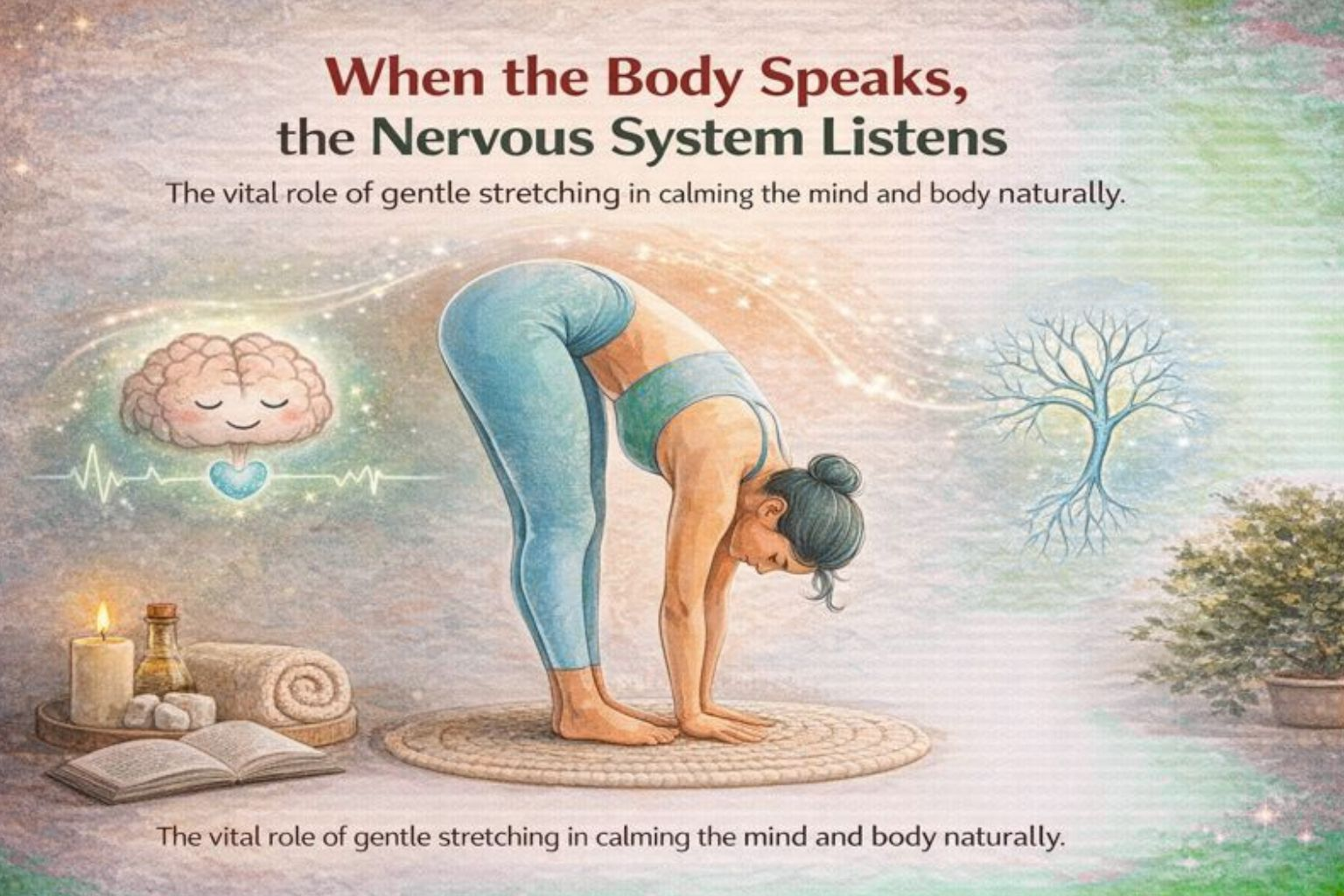
The image above quietly illustrates this connection — a simple forward fold paired with powerful benefits: deep stretching, gentle strengthening, stress reduction, mental calm, and nervous system soothing. Each element represents a biological response, not just a wellness trend.
This article explores how intentional stretching and slow movement restore balance, why the nervous system responds so positively to these practices, and how even a few minutes a day can reshape overall health.
The Nervous System: The Body’s Command Center
To understand why stretching has such a profound effect, it helps to understand the nervous system itself.
The nervous system operates in two primary modes:
1. Sympathetic Nervous System (Fight or Flight)
This system activates during stress. Heart rate increases, muscles tighten, digestion slows, and the body prepares for perceived danger.
2. Parasympathetic Nervous System (Rest and Restore)
This system promotes relaxation. Breathing deepens, muscles soften, digestion improves, and healing processes activate.
In modern life, many people remain stuck in chronic sympathetic activation — constantly alert, tense, and overstimulated. Gentle stretching acts as a biological signal that tells the body it is safe to shift into recovery mode.
Deep Stretching: Releasing Stored Tension
Why Muscles Hold Stress
Stress is not only psychological. When the brain perceives pressure or threat, muscles contract as a protective response. Over time, these contractions become habitual, especially in the spine, hips, neck, and hamstrings.
Deep, slow stretching helps:
- Lengthen tight muscle fibers
- Improve blood flow to stressed tissues
- Release fascia, the connective tissue surrounding muscles
- Reduce pressure on nerves
Forward-fold movements, like the one shown in the image, are particularly effective because they stretch the posterior chain — a network of muscles linked directly to the nervous system.
Gentle Strengthening: Supporting Stability Without Stress
Unlike high-intensity workouts that stimulate adrenaline, gentle strengthening movements build stability without overstimulating the nervous system.
Slow, controlled postures activate small stabilizing muscles, improving:
- Postural alignment
- Joint support
- Muscle coordination
This type of strengthening sends calming feedback to the brain, reinforcing a sense of control and safety within the body.
Stress Reduction: How Movement Quietly Lowers Cortisol
Cortisol is the body’s primary stress hormone. While useful in short bursts, chronically elevated cortisol contributes to:
- Anxiety
- Sleep disturbances
- Weight gain
- Inflammation
- Immune suppression
Research shows that slow stretching and mindful movement reduce cortisol levels, especially when paired with steady breathing. Unlike intense exercise, these movements don’t trigger additional stress responses.
Instead, they help regulate hormone balance naturally.
Mental Calm: The Brain–Body Feedback Loop
The brain constantly receives feedback from the body. When muscles relax, breathing slows, and posture softens, the brain interprets these signals as safety cues.
This creates a feedback loop:
- Stretching relaxes muscles
- Relaxed muscles signal safety
- The brain reduces stress output
- Mental clarity and calm improve
This is why many people report feeling emotionally lighter after stretching — not because stress disappears, but because the nervous system stops amplifying it.
Nervous System Soothing: The Vagus Nerve Connection
One of the most important players in nervous system regulation is the vagus nerve.
The vagus nerve connects the brain to the heart, lungs, and digestive system. When stimulated, it activates the parasympathetic nervous system.
Gentle stretching, forward bends, and slow breathing have been shown to:
- Stimulate vagal tone
- Improve heart rate variability
- Enhance emotional regulation
The posture shown in the image naturally compresses and releases areas that influence vagal pathways, making it a powerful tool for nervous system calming.
Why Simplicity Works Better Than Intensity
Many people assume wellness requires effort, strain, or discipline. But the nervous system responds best to simplicity and consistency, not force.
Gentle stretching works because it:
- Avoids triggering stress hormones
- Encourages body awareness
- Builds trust between the mind and body
This makes it sustainable — a practice people can return to daily without burnout.
Integrating Stretching Into Daily Life
You don’t need an hour-long routine to benefit. Even 5–10 minutes daily can begin shifting nervous system patterns.
Simple ways to integrate:
- Stretch in the morning before checking your phone
- Use a forward fold before bed
- Pause for gentle movement during work breaks
- Pair stretches with slow breathing
The goal is not flexibility — it’s communication with the nervous system.
Long-Term Benefits of Nervous System Regulation
Over time, consistent gentle stretching may support:
- Improved sleep quality
- Reduced anxiety symptoms
- Better digestion
- Enhanced emotional resilience
- Decreased muscle pain
These benefits compound gradually, creating a foundation of calm rather than chasing quick fixes.
10 Frequently Asked Questions (FAQs)
1. How does stretching calm the nervous system?
Stretching activates parasympathetic pathways, signalling safety to the brain and reducing stress hormone output.
2. Is gentle stretching better than intense exercise for stress?
For nervous system regulation, yes. Intense exercise can increase cortisol, while gentle movement lowers it.
3. Can stretching help with anxiety?
Research suggests that slow stretching and mindful movement can reduce anxiety symptoms by calming neural pathways.
4. How long should stretches be held?
Most experts recommend holding gentle stretches for 20–60 seconds without strain.
5. Does breathing matter during stretching?
Yes. Slow, deep breathing enhances the nervous system calming effects.
6. Can stretching improve sleep?
Stretching before bed helps relax muscles and prepares the nervous system for rest.
7. Is stretching safe for beginners?
Gentle stretching is generally safe when done slowly and without forcing the body.
8. How often should stretching be practiced?
Daily or near-daily practice provides the most consistent nervous system benefits.
9. Does posture affect mental health?
Yes. Posture influences breathing, muscle tension, and brain signalling related to stress.
10. Can stretching support emotional regulation?
By calming the nervous system, stretching improves emotional processing and resilience.
The body rarely shouts. It whispers through tension, restlessness, shallow breathing, and fatigue. Gentle stretching is one of the simplest ways to listen — and respond — without force.
The posture shown in the image is more than a stretch. It’s a conversation between muscles, nerves, and the mind. One that says: you are safe to soften.
And sometimes, that’s where healing truly begins.