Stress rarely announces itself loudly at first. It often slips into daily life quietly—tight shoulders after long workdays, restless sleep, shallow breathing, or a constant sense of mental pressure. Over time, unmanaged stress affects mood, digestion, immunity, and overall health. For many health-conscious individuals, the search for relief has shifted toward natural remedies that gently calm the nervous system without causing dependency or side effects.
- Understanding Stress and the Body’s Response
- How Essential Oils Support Stress Relief and Relaxation
- 1. Lavender Oil: The Classic Relaxation Essential Oil
- 2. Chamomile Oil: Gentle Calm for the Mind
- 3. Bergamot Oil: Uplifting and Balancing
- 4. Frankincense Oil: Grounding and Centring
- 5. Ylang Ylang Oil: Easing Emotional Tension
- 6. Peppermint Oil: Stress Relief Through Clarity
- 7. Rose Oil: Emotional Comfort and Calm
- 8. Sandalwood Oil: Deep Relaxation and Stillness
- 9. Clary Sage Oil: Hormonal and Emotional Balance
- 10. Sweet Orange Oil: Gentle Uplift and Relaxation
- Safe Ways to Use Essential Oils for Stress Relief
- When Essential Oils Work Best
- FAQs: Essential Oils for Stress Relief
- Final Thoughts
Among these remedies, essential oils have gained attention for their ability to influence mood, relaxation, and emotional balance through scent and topical application. Used for centuries across different cultures, essential oils continue to play a role in modern wellness routines. This article explores 10 essential oils for natural stress relief and relaxation, offering medically grounded explanations and practical ways to use them safely and effectively.
Understanding Stress and the Body’s Response
Stress activates the body’s “fight or flight” response, triggering the release of hormones such as cortisol and adrenaline. While this response is useful in short bursts, chronic stress keeps the nervous system in a heightened state, leading to fatigue, anxiety, muscle tension, and sleep disturbances.
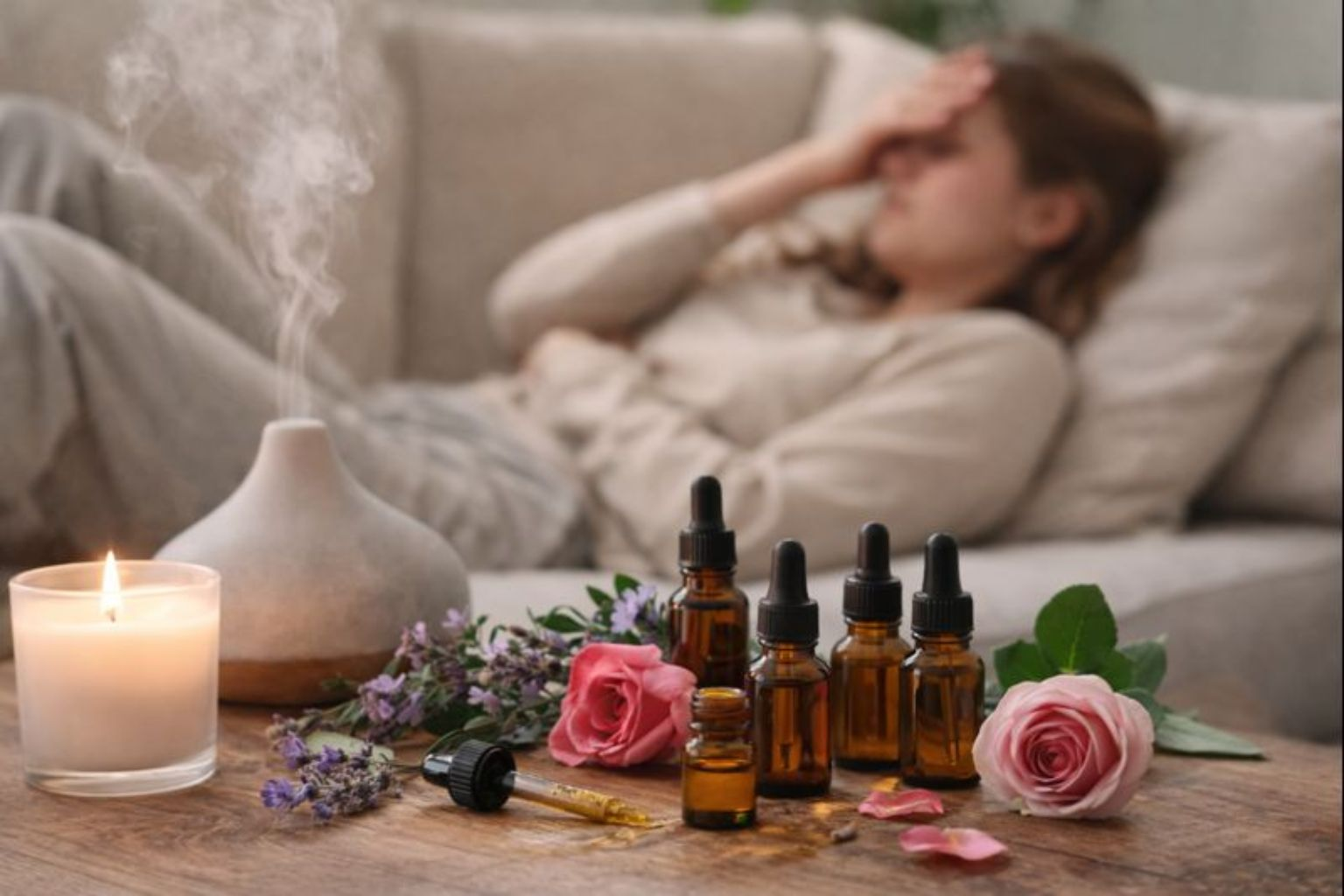
Natural stress relief focuses on calming the nervous system, encouraging the body to shift into a relaxed, restorative state. Aromatherapy works by stimulating olfactory receptors that communicate directly with areas of the brain responsible for emotion and memory, making essential oils a powerful yet gentle tool for relaxation.
How Essential Oils Support Stress Relief and Relaxation
Essential oils are concentrated plant extracts that contain aromatic compounds capable of influencing mood and physiological responses.
Potential benefits include:
- Calming overactive thoughts
- Reducing muscle tension
- Improving sleep quality
- Supporting emotional balance
When used correctly, essential oils complement other stress-management practices such as mindfulness, sleep, and gentle movement.
1. Lavender Oil: The Classic Relaxation Essential Oil
Lavender is one of the most widely studied essential oils for stress relief. Its calming aroma is known to reduce anxiety and promote restful sleep.
Why lavender helps:
- Supports nervous system relaxation
- Reduces restlessness and tension
- Encourages deeper sleep
Lavender oil is often used in diffusers, bath rituals, or diluted for topical application before bedtime.
2. Chamomile Oil: Gentle Calm for the Mind
Chamomile is commonly associated with calming teas, but its essential oil offers similar soothing effects.
Benefits include:
- Reducing irritability and nervous tension
- Supporting emotional comfort
- Promoting relaxation during stressful periods
Chamomile oil is especially helpful for stress linked to emotional exhaustion.
3. Bergamot Oil: Uplifting and Balancing
Bergamot oil has a fresh, citrus aroma that helps lift mood while calming nervous tension.
How it supports relaxation:
- Encourages positive mood
- Reduces stress-related fatigue
- Balances emotional energy
Bergamot is often used during the day when stress feels mentally draining.
4. Frankincense Oil: Grounding and Centring
Frankincense has been used for centuries in meditation and spiritual practices.
Benefits of frankincense:
- Slows breathing
- Encourages mindfulness
- Supports deep relaxation
It is particularly useful during meditation or moments of emotional overwhelm.
5. Ylang Ylang Oil: Easing Emotional Tension
Ylang ylang has a sweet floral scent known to promote emotional balance.
How it helps:
- Reduces anxiety and tension
- Encourages relaxation
- Supports mood regulation
It is often used in evening relaxation routines or self-care rituals.
6. Peppermint Oil: Stress Relief Through Clarity
While peppermint is energizing, it can still help relieve stress by reducing mental fatigue and tension headaches.
Benefits include:
- Improves focus
- Relieves stress-related headaches
- Reduces muscle tension
Peppermint oil is useful when stress manifests as mental exhaustion rather than anxiety.
7. Rose Oil: Emotional Comfort and Calm
Rose oil is often associated with emotional healing and comfort.
Why it’s helpful:
- Soothes emotional stress
- Encourages feelings of safety
- Promotes inner calm
It is especially beneficial during emotionally challenging times.
8. Sandalwood Oil: Deep Relaxation and Stillness
Sandalwood’s warm, woody scent promotes deep relaxation and grounding.
Benefits include:
- Slowing racing thoughts
- Supporting meditation
- Reducing stress-related tension
Sandalwood oil is ideal for nighttime relaxation and mindfulness practices.
9. Clary Sage Oil: Hormonal and Emotional Balance
Clary sage is often used for stress related to hormonal fluctuations.
How it helps:
- Supports emotional balance
- Reduces nervous tension
- Promotes calmness
It is commonly used during periods of emotional or hormonal stress.
10. Sweet Orange Oil: Gentle Uplift and Relaxation
Sweet orange oil provides a cheerful, uplifting aroma that helps ease stress gently.
Benefits include:
- Reducing anxiety
- Encouraging relaxation
- Improving mood
It is especially helpful for stress associated with low mood or fatigue.
Safe Ways to Use Essential Oils for Stress Relief
Common methods include:
- Diffusing oils into the air
- Diluting with carrier oils for topical use
- Adding to the bathwater
Always perform a patch test and avoid ingesting essential oils unless advised by a qualified professional.
When Essential Oils Work Best
Essential oils are most effective when combined with healthy lifestyle practices such as:
- Adequate sleep
- Regular movement
- Mindful breathing
- Balanced nutrition
They support relaxation but are not replacements for medical care in severe anxiety or stress disorders.
FAQs: Essential Oils for Stress Relief
1. What are the best essential oils for stress relief?
Lavender, chamomile, bergamot, and frankincense are among the most effective essential oils for stress relief.
2. How do essential oils help with relaxation?
Essential oils influence brain regions linked to emotion and stress, promoting calmness through scent and topical use.
3. Can essential oils reduce anxiety naturally?
Essential oils may help ease mild anxiety and promote relaxation when used consistently and safely.
4. Is aromatherapy safe for daily use?
Yes, when used properly and in moderation, aromatherapy is generally safe for daily relaxation routines.
5. Can essential oils improve sleep quality?
Certain oils like lavender and sandalwood support relaxation and may improve sleep quality.
6. Do essential oils work immediately?
Some people experience quick calming effects, while others notice benefits with regular use.
7. Are essential oils safe for children?
Some oils are safe when diluted properly, but professional guidance is recommended for children.
8. Can stress relief oils be applied directly to skin?
Essential oils should always be diluted with a carrier oil before topical application.
9. Which oil is best for emotional stress?
Rose and ylang ylang oils are commonly used for emotional comfort and balance.
10. When should stress be medically evaluated?
Seek professional help if stress becomes overwhelming, persistent, or interferes with daily functioning.
Final Thoughts
Stress is an unavoidable part of life, but how the body responds to it makes all the difference. Essential oils offer a gentle, natural way to support relaxation and emotional balance—helping the nervous system slow down and reset. When used mindfully and consistently, these natural remedies become more than scents; they become quiet companions in the journey toward calm, clarity, and well-being.