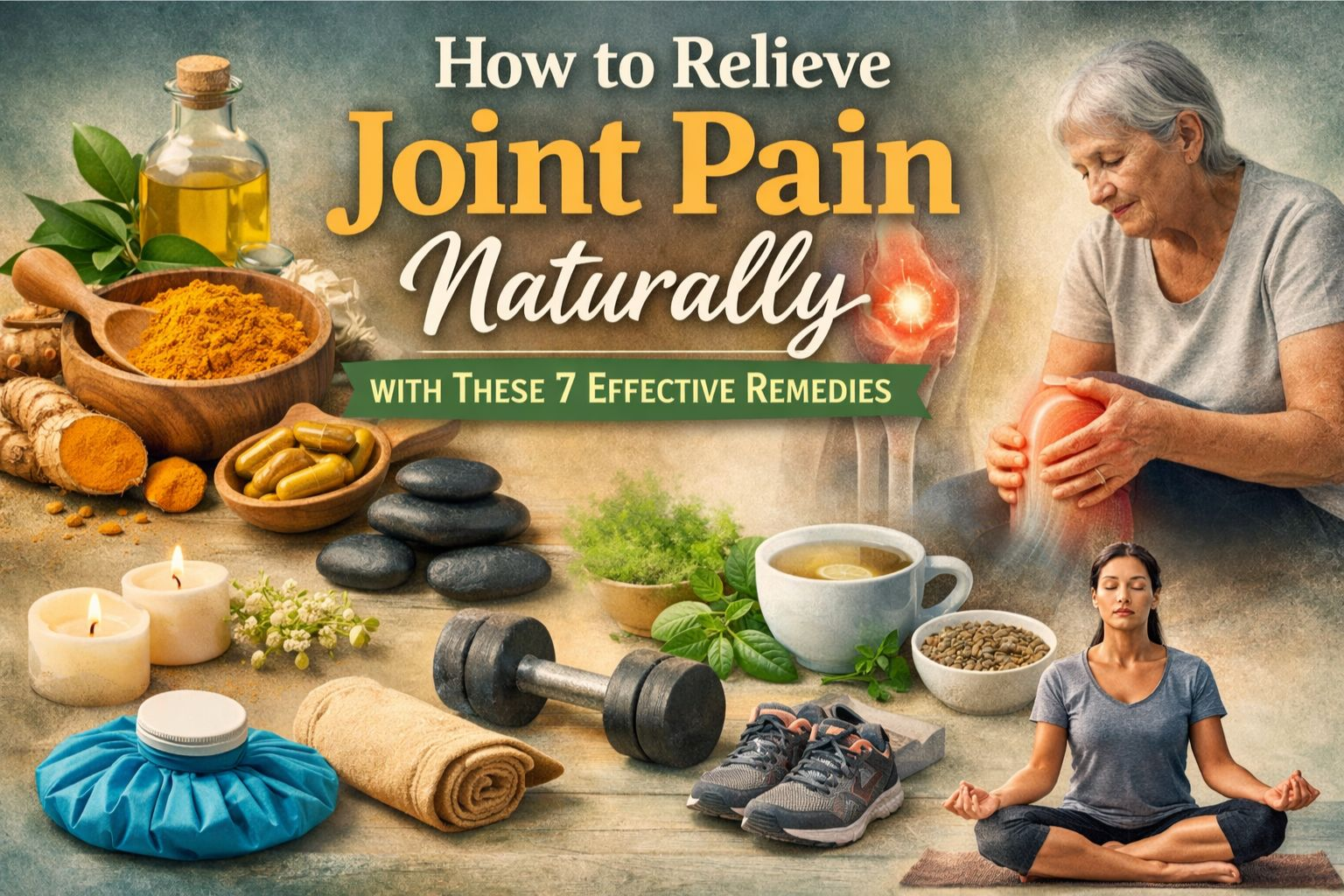
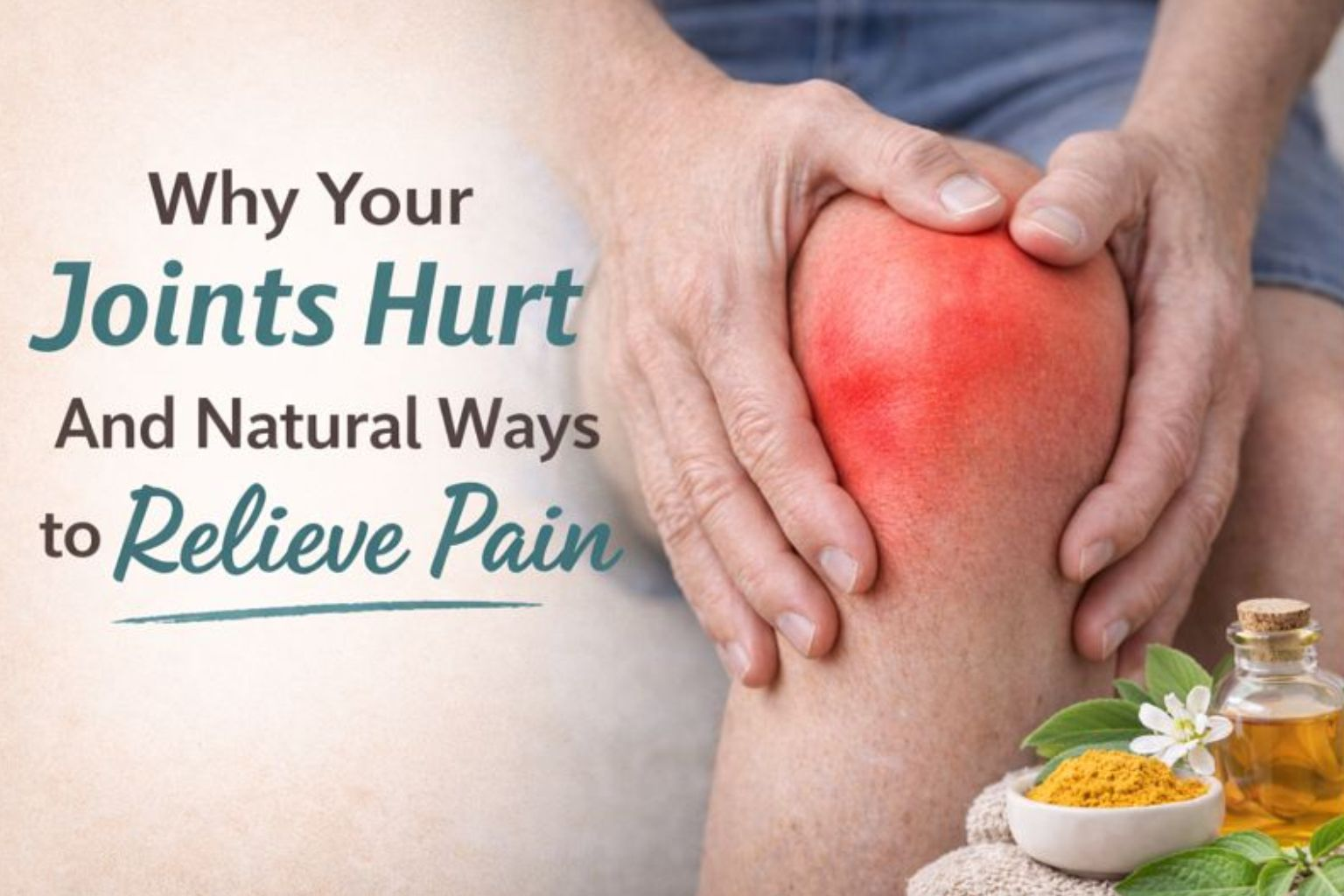
Why your joints hurt and how to relieve joint pain naturally is a question that often arises quietly—during the first stiff steps in the morning, when standing up after sitting too long, or when familiar movements begin to feel uncomfortable. Joint pain rarely appears suddenly without reason. Instead, it tends to develop gradually, shaped by daily habits, aging tissues, inflammation, and the body’s response to stress and movement.
- Understanding How Joints Work
- Why Joints Hurt: Common Underlying Causes
- The Connection Between Lifestyle and Joint Pain
- Why Joint Pain Feels Worse With Age
- How Natural Joint Pain Relief Works
- Natural Remedies for Joint Stiffness and Discomfort
- Movement as Medicine for Joint Health
- Dietary Patterns and Joint Inflammation
- When Natural Remedies Help Most
- When Medical Guidance Is Necessary
- Conclusion
- Frequently Asked Questions (FAQs)
For many people, joint discomfort becomes part of everyday life long before it is fully understood. Some dismiss it as a normal sign of aging, while others worry it signals something more serious. In reality, joint pain exists along a wide spectrum—from temporary stiffness to chronic inflammation—and understanding its underlying causes is the first step toward managing it safely.
Natural approaches to joint pain relief focus on supporting the body’s own repair and regulation systems. Rather than masking symptoms, they aim to reduce inflammation, improve mobility, and protect joint structures over time. When combined with informed lifestyle choices, these methods can help many people regain comfort and confidence in daily movement.
Understanding How Joints Work
Joints are the meeting points between bones, designed to allow movement while maintaining stability. Each joint is a complex structure made up of several components working together.
Key Structures Within a Joint
- Cartilage: A smooth, flexible tissue that cushions bones and reduces friction
- Synovial fluid: A lubricating fluid that nourishes cartilage and allows smooth motion
- Ligaments: Strong connective tissues that stabilize joints
- Tendons: Tissues that attach muscles to bones and enable movement
Healthy joints rely on balance—adequate lubrication, intact cartilage, and controlled inflammation. When this balance is disrupted, discomfort and stiffness can develop.
Why Joints Hurt: Common Underlying Causes
Joint pain is not a single condition. It is a symptom that can arise from multiple physiological processes, often occurring simultaneously.
Inflammation as a Central Factor
Inflammation is one of the most common reasons joints hurt. It is a natural immune response meant to protect and repair tissue. However, when inflammation becomes persistent, it can damage joint structures rather than heal them.
Chronic low-grade inflammation may be driven by:
- Repetitive strain
- Excess body weight increases joint load
- Poor recovery after injury
- Inflammatory dietary patterns
- Prolonged stress
Over time, this ongoing inflammatory state can reduce joint flexibility and increase pain sensitivity.
Cartilage Wear and Reduced Cushioning
Cartilage does not regenerate quickly. As it thins due to aging, mechanical stress, or injury, bones may begin to move less smoothly against each other. This increased friction can cause stiffness, aching, and reduced range of motion.
This process does not happen overnight. Many people notice subtle warning signs years before significant pain develops.
Joint Stiffness From Reduced Movement
Joints are designed to move. When movement is limited—due to sedentary habits, prolonged sitting, or fear of pain—synovial fluid circulation decreases. This leads to stiffness, particularly after rest, and can make joints feel “rusty” when movement resumes.
The Connection Between Lifestyle and Joint Pain
Daily habits influence joint health more than many people realize. Small, repeated stresses accumulate over time.
Physical Load and Body Mechanics
Poor posture, uneven gait, or repetitive movements can overload certain joints while leaving others underused. This imbalance increases wear in specific areas, often leading to localized pain.
Weight and Joint Stress
Excess body weight increases pressure on weight-bearing joints such as the knees, hips, and ankles. Even modest weight changes can significantly alter joint load, influencing pain levels and mobility.
Sleep and Recovery
Joint tissues repair themselves during rest. Inadequate sleep disrupts this process and may amplify pain perception by affecting nervous system sensitivity.
Why Joint Pain Feels Worse With Age
Aging does not automatically cause joint pain, but it does change how joints respond to stress.
- Collagen production slows, reducing tissue resilience
- Synovial fluid becomes less efficient
- Muscles supporting joints may weaken without regular activity
These changes make joints more vulnerable to inflammation and stiffness. However, they also respond well to supportive care when addressed early.
How Natural Joint Pain Relief Works
Natural joint pain relief focuses on restoring balance rather than suppressing symptoms.
Reducing Inflammatory Signals
Certain nutrients and lifestyle practices help regulate inflammatory pathways in the body. By calming excessive inflammation, joint tissues experience less irritation and improved function.
Supporting Tissue Nutrition
Cartilage depends on the surrounding fluid and circulation for nourishment. Movement, hydration, and proper nutrient intake all contribute to maintaining this supply.
Improving Joint Mobility
Gentle, consistent movement helps distribute synovial fluid and maintain range of motion, reducing stiffness and discomfort.
Natural Remedies for Joint Stiffness and Discomfort
Natural remedies work best when viewed as supportive tools rather than standalone solutions.
Warmth and Circulation
Applying warmth can relax surrounding muscles and improve blood flow, easing stiffness and making movement more comfortable. Warm showers or heating pads are often helpful during flare-ups.
Cold for Inflammatory Relief
Cold application may reduce swelling and calm irritated tissues after activity. Short, controlled use helps manage inflammation without impairing circulation.
Herbal and Plant-Based Support
Certain plant compounds have been studied for their role in modulating inflammatory responses. When used appropriately, they may help support joint comfort over time.
Movement as Medicine for Joint Health
Contrary to common fear, appropriate movement is one of the most effective natural approaches to joint pain relief.
Low-Impact Activities
Activities such as walking, swimming, or gentle stretching encourage joint lubrication without excessive stress. These movements maintain flexibility and support muscle strength around joints.
Strength and Stability
Strong muscles reduce strain on joints by absorbing impact and stabilizing movement patterns. Even light resistance exercises can improve joint support when done consistently.
Dietary Patterns and Joint Inflammation
Food influences inflammation levels throughout the body, including in joints.
Anti-Inflammatory Eating Habits
A diet rich in whole foods—vegetables, fruits, healthy fats, and lean proteins—provides antioxidants and nutrients that support tissue repair.
Hydration and Joint Lubrication
Water is essential for maintaining synovial fluid volume. Even mild dehydration can contribute to stiffness and discomfort.
When Natural Remedies Help Most
Natural approaches are particularly effective when:
- Joint pain is mild to moderate
- Stiffness is activity-related
- Inflammation is low-grade and chronic
- Care is applied consistently over time
Early intervention often prevents progression and reduces reliance on stronger interventions.
When Medical Guidance Is Necessary
Professional evaluation is important if:
- Joint pain is severe or worsening
- Swelling, redness, or heat is persistent
- Mobility is significantly limited
- Pain follows injury or trauma
- Symptoms interfere with daily life
Natural care can complement medical treatment, but should not replacean appropriate diagnosis when needed.
Conclusion
Understanding why joints hurt and how to relieve joint pain naturally begins with recognizing that joint discomfort is often a signal—not a failure of the body, but a request for support. Inflammation, movement patterns, lifestyle habits, and aging all influence joint health over time.
Natural approaches focus on restoring balance through gentle movement, supportive nutrition, and daily care that respects how joints function. When used consistently and thoughtfully, these strategies can help reduce stiffness, improve comfort, and protect joint health for the long term—without exaggerated promises or unnecessary intervention.
Frequently Asked Questions (FAQs)
1. Why do joints hurt, and what natural remedies help relieve joint pain?
Joints often hurt due to inflammation, stiffness, or cartilage stress. Natural remedies such as gentle movement, heat or cold therapy, hydration, and anti-inflammatory dietary habits help support joint comfort by improving circulation, reducing irritation, and maintaining flexibility over time.
2. Can lifestyle changes reduce joint pain naturally over time?
Yes. Regular low-impact exercise, weight management, balanced nutrition, stress reduction, and adequate sleep all reduce joint strain and inflammation. These changes support the body’s repair mechanisms and often lead to gradual, sustained improvements in joint comfort.
3. Are natural remedies effective for chronic joint pain?
Natural remedies can help manage chronic joint pain when used consistently and as part of a broader care approach. While they may not eliminate pain entirely, they often reduce stiffness, improve mobility, and support overall joint health alongside medical guidance.
4. Why does joint pain feel worse in the morning?
Morning stiffness occurs because joints are inactive during sleep, reducing synovial fluid circulation. Gentle movement helps restore lubrication, easing stiffness and improving comfort as the day progresses.
5. Does inflammation always mean joint damage?
Not necessarily. Inflammation is a protective response, but chronic inflammation can contribute to tissue irritation over time. Managing inflammation early helps protect joint structures and maintain long-term function.
6. Can exercise worsen joint pain?
Improper or excessive exercise can worsen pain, but appropriate low-impact movement usually improves joint health. The key is choosing activities that support mobility without overloading sensitive joints.
7. How does weight affect joint pain?
Extra body weight increases mechanical stress on joints, especially knees and hips. Reducing excess weight can significantly decrease joint load and improve pain levels over time.
8. Are stiff joints a normal part of aging?
Stiffness becomes more common with age due to changes in cartilage and lubrication, but it is not inevitable. Regular movement and supportive care can maintain joint flexibility well into later years.
9. Can stress make joint pain worse?
Yes. Chronic stress influences inflammation and muscle tension, both of which can increase joint discomfort. Stress management supports overall pain regulation and joint health.
10. When should joint pain be checked by a doctor?
Medical evaluation is important if joint pain is severe, persistent, associated with swelling or redness, or limits daily activities. Early assessment helps rule out underlying conditions and guide appropriate care.