
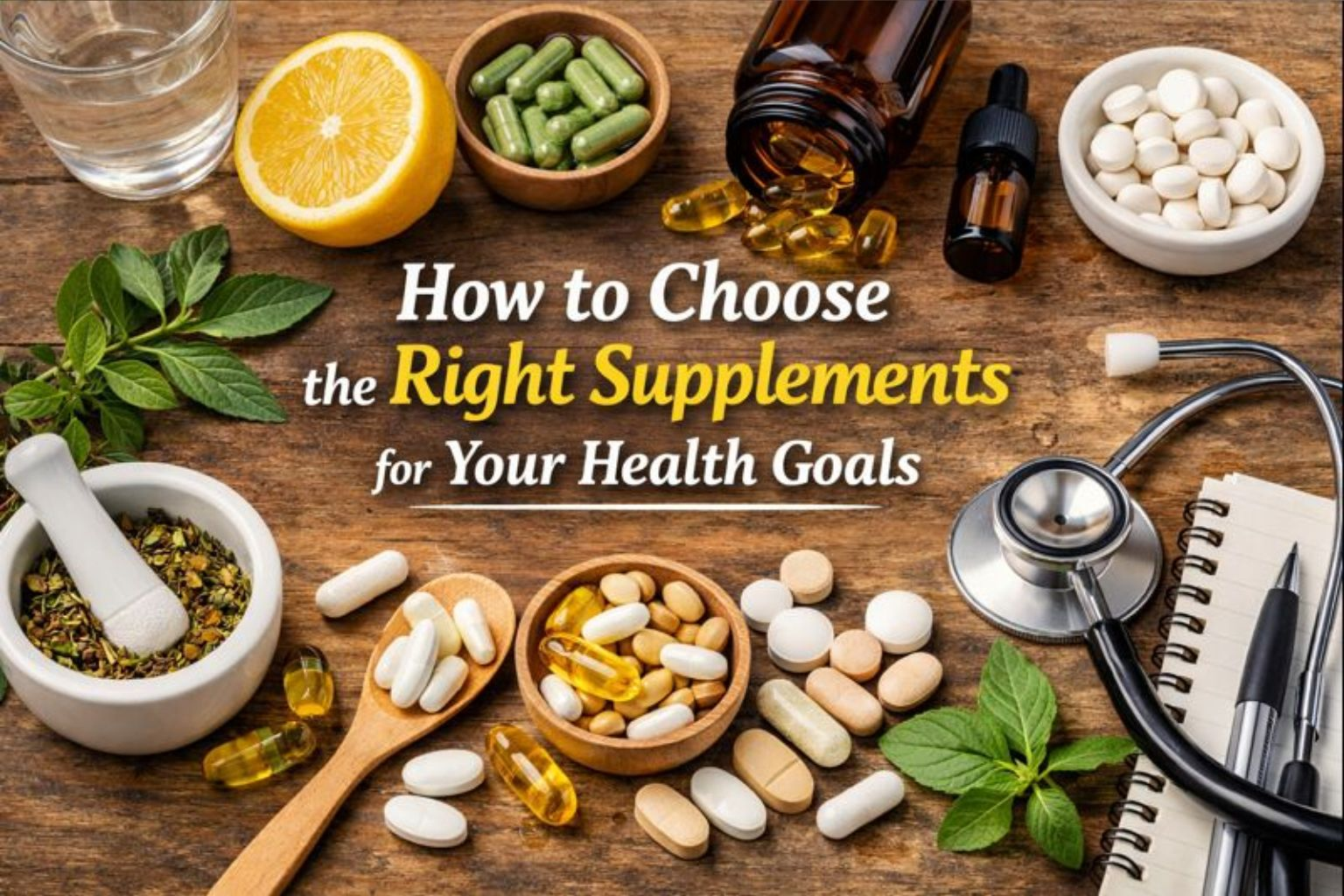
How to choose the right supplements has become one of the most common wellness questions of the modern age. In a world overflowing with health advice, brightly labelled bottles, and bold promises, many people are left feeling overwhelmed rather than empowered.
- Understanding What Supplements Are—and What They Are Not
- Why People Turn to Supplements in the First Place
- Clarifying Your Health Goals Before Choosing Supplements
- The Role of Nutritional Deficiencies in Supplement Decisions
- Understanding Bioavailability and Absorption
- Quality, Purity, and Transparency in Supplement Selection
- The Importance of Safety and Interactions
- Personalized Nutrition: Why One Size Does Not Fit All
- When Supplements Are Most Helpful—and When They Are Not
- Lifestyle Foundations That Make Supplements More Effective
- Knowing When Medical Guidance Is Necessary
- Conclusion
- Frequently Asked Questions (FAQs)
Supplements now line the shelves of grocery stores, pharmacies, and online marketplaces. From multivitamins and herbal blends to protein powders and specialty capsules, the choices seem endless. Yet despite their popularity, supplements are often misunderstood. Some people take them daily without knowing why, while others avoid them entirely out of fear or confusion.
This article takes a calm, evidence-informed look at how supplements can fit thoughtfully into a health-conscious lifestyle. Rather than promoting products or quick fixes, it focuses on helping readers understand when supplements may be useful, how to choose them safely, and how to align them with individual health goals.
By grounding supplement choices in physiology, real-life context, and preventive care principles, this guide aims to restore clarity and confidence in a space that too often feels noisy and contradictory.
Understanding What Supplements Are—and What They Are Not
Dietary supplements are designed to support nutrition, not replace it. They may include vitamins, minerals, amino acids, fatty acids, probiotics, or plant-based compounds intended to complement a person’s diet.
What supplements do well is fill nutritional gaps when diet alone may fall short. What they do not do is cure disease, override poor lifestyle habits, or function as substitutes for balanced meals.
From a physiological standpoint, the body absorbs and uses nutrients in complex ways. Whole foods provide fibre, enzymes, and synergistic compounds that supplements cannot fully replicate. This is why most nutrition experts emphasize food-first approaches, using supplements only when there is a clear rationale.
Understanding this distinction helps set realistic expectations and prevents disappointment or misuse.
Why People Turn to Supplements in the First Place
The reasons people explore supplements are deeply personal and often rooted in real-life challenges.
Some individuals experience fatigue despite eating reasonably well. Others struggle with digestive issues, restrictive diets, or changing nutritional needs during different life stages. Aging, stress, chronic illness, pregnancy, intense physical activity, and environmental factors can all influence nutrient requirements.
In many cases, supplementation arises not from trends but from genuine attempts to feel better, function better, or protect long-term health.
The key is ensuring that these choices are guided by understanding rather than assumption.
Clarifying Your Health Goals Before Choosing Supplements
One of the most important yet overlooked steps in supplement selection is goal clarity.
Supplements are not universal. What supports one person’s wellness goals may be unnecessary—or even counterproductive—for another.
Health goals typically fall into broad categories such as:
- Supporting energy and vitality
- Maintaining bone or muscle health
- Supporting digestion or gut balance
- Managing stress or sleep quality
- Supporting immune function
- Addressing known nutritional deficiencies
Each goal involves different physiological systems. For example, energy metabolism relies heavily on B vitamins, iron, and magnesium, while bone health depends on calcium, vitamin D, and vitamin K.
Without defining the “why,” supplement choices become guesswork.
The Role of Nutritional Deficiencies in Supplement Decisions
Many supplement needs stem from nutrient insufficiencies rather than outright deficiencies.
A deficiency occurs when nutrient levels are low enough to cause clinical symptoms. Insufficiency, on the other hand, may subtly affect energy, mood, or immune resilience without obvious warning signs.
Modern diets, even when calorie-sufficient, may lack micronutrient diversity. Soil depletion, food processing, limited food variety, and lifestyle stressors all play a role.
Blood testing, dietary assessments, and medical guidance can help identify whether supplementation is warranted. When possible, this evidence-based approach reduces unnecessary intake and improves effectiveness.
Understanding Bioavailability and Absorption
Not all supplements are absorbed equally.
Bioavailability refers to how well a nutrient is absorbed and utilized by the body. Factors such as chemical form, dosage, timing, and individual digestive health influence this process.
For example, some minerals compete for absorption, while certain vitamins require dietary fat for optimal uptake. Gastrointestinal conditions, medications, and age-related changes can further affect absorption efficiency.
This explains why more is not always better—and why quality often matters more than quantity.
Quality, Purity, and Transparency in Supplement Selection
Choosing supplements responsibly involves evaluating how products are made, not just what they claim to contain.
High-quality supplements typically demonstrate:
- Clear labelling with ingredient forms and dosages
- Third-party testing for purity and potency
- Transparent sourcing and manufacturing standards
- Absence of unnecessary fillers or artificial additives
From a trustworthiness perspective, transparency signals accountability. It allows consumers to make informed decisions rather than relying on marketing language alone.
The Importance of Safety and Interactions
Supplements may seem harmless, but they can interact with medications, medical conditions, or each other.
Certain herbs influence liver enzymes that affect drug metabolism. Some minerals interfere with medication absorption. Fat-soluble vitamins can accumulate in the body if taken excessively.
This is why healthcare guidance is especially important for individuals who are pregnant, managing chronic conditions, or taking prescription medications.
Safety-conscious supplementation respects the complexity of human biology.
Personalized Nutrition: Why One Size Does Not Fit All
Genetics, lifestyle, diet, environment, and health history all shape nutritional needs.
Two people eating similar diets may process nutrients differently due to variations in digestion, metabolism, or gut microbiota. Stress levels, sleep quality, and physical activity further influence requirements.
Personalized nutrition does not require perfection—it requires awareness. Listening to the body, tracking responses, and adjusting thoughtfully over time creates a sustainable approach to supplementation.
When Supplements Are Most Helpful—and When They Are Not
Supplements tend to offer the most benefit when they:
- Address documented deficiencies
- Support specific life stages or increased demands
- Complement dietary improvements
- Are used consistently and appropriately
They are less helpful when used as shortcuts, taken sporadically, or relied upon to compensate for chronically poor nutrition.
Understanding this balance prevents both overuse and underuse.
Lifestyle Foundations That Make Supplements More Effective
Supplements work best when layered onto solid lifestyle foundations.
Adequate sleep supports nutrient metabolism. Regular movement improves circulation and absorption. Balanced meals enhance bioavailability. Stress management reduces nutrient depletion.
Without these basics, even the most carefully chosen supplement may underperform.
Knowing When Medical Guidance Is Necessary
While many supplements are available without a prescription, medical guidance becomes essential when:
- Symptoms persist despite lifestyle changes
- Multiple supplements are being considered
- Chronic conditions are present
- Medications are involved
- Pregnancy or breastfeeding is a factor
Seeking guidance does not signal weakness—it reflects informed self-care.
Conclusion
Learning how to choose the right supplements for your health goals is less about finding the perfect product and more about understanding the body’s needs, limits, and signals.
When approached thoughtfully, supplements can serve as supportive tools within a broader wellness framework. When approached impulsively, they risk becoming distractions from the foundational habits that sustain long-term health.
By grounding supplement choices in evidence, personalization, and safety, individuals can move away from confusion and toward confident, informed care—one mindful decision at a time.
Frequently Asked Questions (FAQs)
1. How do I know if I actually need supplements?
Many people benefit from supplements when dietary intake falls short or specific needs increase. Blood tests, dietary reviews, and symptom patterns can help determine whether supplementation is appropriate rather than relying on guesswork.
2. Are supplements safe to take daily?
Some supplements are safe for daily use when taken at appropriate doses, while others are meant for short-term support. Safety depends on the nutrient, dosage, health status, and whether medications are involved.
3. Can supplements replace a healthy diet?
Supplements cannot replace whole foods. They lack fibre, enzymes, and the complex nutrient interactions found in real meals. They work best as additions to—not substitutes for—a balanced diet.
4. What should I look for on a supplement label?
Clear ingredient forms, precise dosages, third-party testing, and minimal additives are key indicators of quality. Avoid products that rely heavily on vague claims or proprietary blends.
5. Do natural supplements work better than synthetic ones?
Effectiveness depends more on bioavailability and quality than whether a supplement is labelled natural or synthetic. Some synthetic forms are well-absorbed, while some natural forms may not be.
6. Can supplements interact with medications?
Yes. Some supplements affect how medications are absorbed or metabolized. This is why it is important to discuss supplement use with a healthcare provider when medications are involved.
7. How long does it take to see results from supplements?
Results vary depending on the nutrient, deficiency level, and individual metabolism. Some effects may appear within weeks, while others take months of consistent use.
8. Is it possible to take too many supplements?
Yes. Excessive supplementation can cause imbalances or toxicity, especially with fat-soluble vitamins and minerals. More is not always better.
9. Should supplements change with age?
Nutritional needs often change with age due to shifts in absorption, metabolism, and lifestyle. Periodic reassessment helps ensure supplements remain appropriate over time.
10. When should I stop taking a supplement?
Supplements should be reevaluated if goals change, symptoms resolve, side effects appear, or new medications are introduced. Regular reassessment supports safe, effective use.