
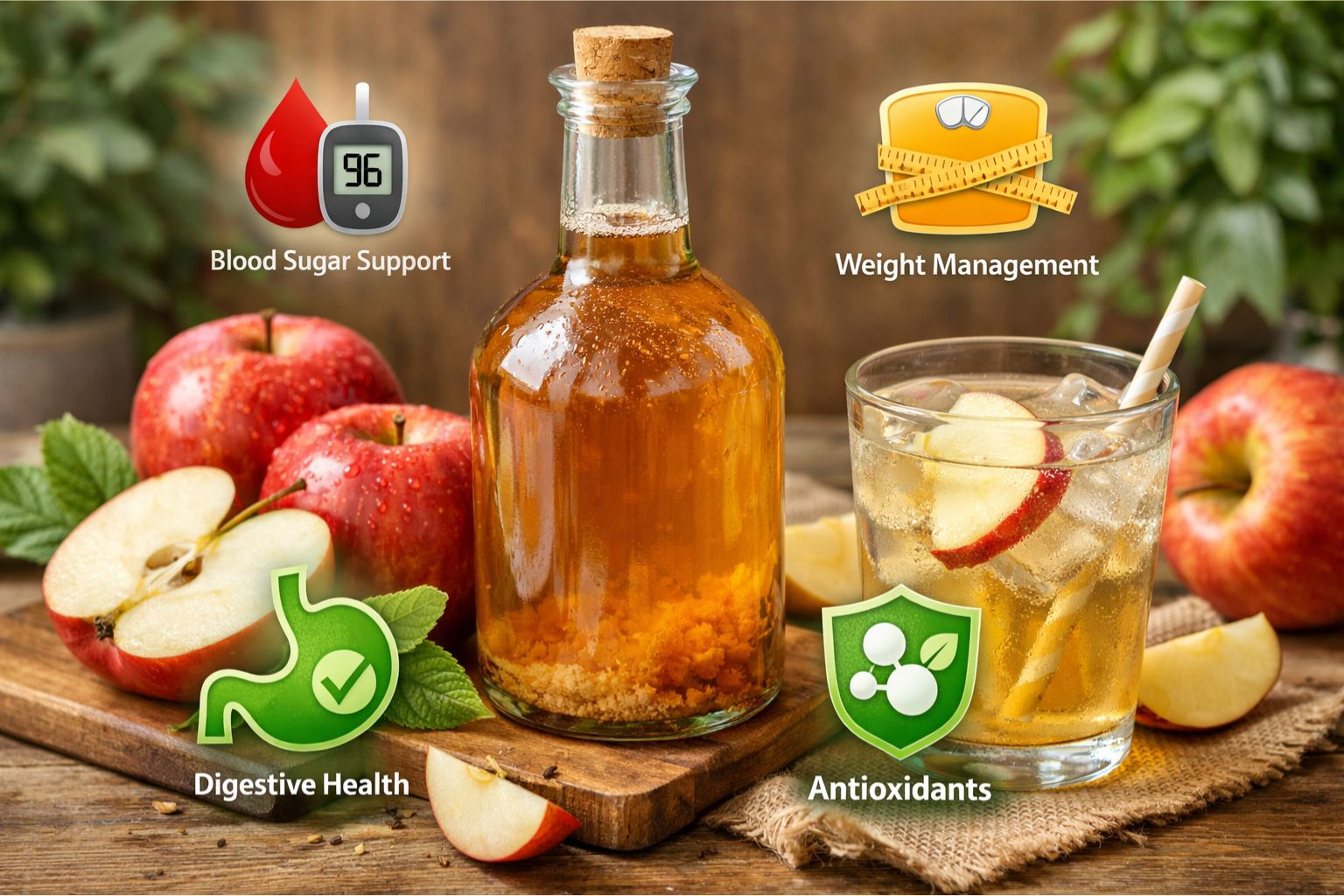
Apple cider vinegar (ACV) has been a staple in natural remedies for centuries. Its tangy flavour and pungent aroma make it recognizable, but its benefits extend far beyond the kitchen. Health-conscious individuals worldwide are exploring how apple cider vinegar can support weight management, improve digestive health, and contribute to overall wellness.
- What is Apple Cider Vinegar?
- How Apple Cider Vinegar Supports Weight Loss
- Apple Cider Vinegar for Digestive Health
- Additional Health Benefits of Apple Cider Vinegar
- Safe Ways to Use Apple Cider Vinegar
- Integrating Apple Cider Vinegar into Daily Life
- Who Should Avoid or Limit ACV
- FAQs: Apple Cider Vinegar Health Benefits
While research is ongoing, several scientifically backed mechanisms explain why ACV may benefit the body. Understanding how to use it safely and effectively allows people to integrate it into daily routines without adverse effects.
This guide explores apple cider vinegar health benefits, safe usage, and practical tips for maximizing its potential while maintaining a holistic approach to wellness.
What is Apple Cider Vinegar?
Apple cider vinegar is a type of vinegar made by fermenting crushed apples. During fermentation, naturally occurring sugars in the apples are converted into alcohol by yeast, and then bacteria convert the alcohol into acetic acid, the main active compound in ACV.
Key components include:
- Acetic acid: responsible for many of ACV’s biological effects
- Polyphenols: plant compounds with antioxidant properties
- Trace vitamins and minerals: including potassium, magnesium, and calcium
The combination of acetic acid, antioxidants, and minerals gives ACV its reputed health-promoting qualities, which extend to metabolism, digestion, and even heart health.
How Apple Cider Vinegar Supports Weight Loss
One of the most popular reasons people turn to ACV is weight management. While it’s not a magic solution, studies suggest it may aid in modest weight reduction and appetite regulation.
1. Appetite Regulation
ACV may promote feelings of fullness by slowing gastric emptying. This means food remains in the stomach longer, which can help reduce overall calorie intake.
2. Blood Sugar Control
Several studies show ACV can improve post-meal blood sugar levels and insulin sensitivity. Stabilizing blood sugar may reduce sugar cravings and prevent sudden energy crashes.
3. Fat Metabolism Support
Animal studies suggest acetic acid may enhance fat burning and reduce fat storage. While human studies are limited, incorporating ACV as part of a balanced diet can complement healthy weight management.
Usage Tip: Mix 1–2 teaspoons of ACV in a large glass of water and consume before meals. Always dilute ACV to prevent irritation of the esophagus and tooth enamel.
Apple Cider Vinegar for Digestive Health
ACV may also play a role in supporting digestion and gut health. Its acidic nature can enhance stomach acid levels, which helps break down food more efficiently.
1. Enhancing Digestion
Low stomach acid can contribute to bloating, indigestion, and nutrient malabsorption. A small amount of ACV diluted in water before meals may help improve digestion and nutrient absorption.
2. Prebiotic Effects
ACV contains compounds that may support healthy gut bacteria. While more research is needed, some studies suggest that fermented foods like ACV can contribute to a balanced gut microbiome, improving overall digestive function.
3. Relief from Occasional Heartburn
Diluted ACV may help some people with mild heartburn by improving acid balance in the stomach. However, those with severe reflux should consult a healthcare provider before use.
Additional Health Benefits of Apple Cider Vinegar
Beyond weight loss and digestion, ACV may provide several other potential benefits:
1. Blood Sugar Management
Regular, moderate consumption of ACV may help lower fasting blood glucose levels and improve insulin sensitivity, particularly in people with type 2 diabetes or prediabetes.
2. Heart Health
ACV may reduce risk factors associated with heart disease, such as high triglycerides and LDL cholesterol, though most studies are in animals. Incorporating ACV as part of a heart-healthy diet may be beneficial.
3. Antimicrobial Properties
ACV has natural antibacterial and antifungal effects, which is why it has been used historically for cleaning, skin care, and food preservation.
4. Skin and Hair Care
When diluted, ACV may help balance skin pH and reduce bacterial growth, supporting acne-prone skin. It can also be used as a natural hair rinse to improve shine and scalp health.
Safe Ways to Use Apple Cider Vinegar
1. Dilute Before Consuming
Always mix ACV with water or another liquid. A common ratio is 1–2 teaspoons in 8 ounces of water. Undiluted ACV can damage tooth enamel or irritate the throat.
2. Avoid Excessive Consumption
Limit intake to 1–2 tablespoons per day. Excess ACV may lead to low potassium, digestive discomfort, or erosion of tooth enamel.
3. Use a Straw
Drinking ACV through a straw can reduce contact with teeth, protecting enamel.
4. Timing
Taking ACV before meals may support digestion and fullness, but some people prefer it in the morning or diluted in herbal teas.
5. Topical Use
Dilute 1 part ACV with 2–3 parts water for skin or hair applications. Conduct a patch test first to prevent irritation.
Integrating Apple Cider Vinegar into Daily Life
- Morning tonic: 1–2 teaspoons in warm water
- Salad dressing: ACV mixed with olive oil, herbs, and spices
- Marinades: Adds flavor while retaining health benefits
- Digestive support: Diluted ACV before meals
- Natural cleaning: Harness antimicrobial properties for household use
Combining ACV with a balanced diet, regular exercise, and hydration amplifies its benefits. It should be seen as a complement to healthy habits rather than a replacement for them.
Who Should Avoid or Limit ACV
While generally safe for most adults, caution is needed in certain cases:
- People with ulcers or acid reflux: Can worsen symptoms
- Those with kidney disease: Excess acid may affect kidney function
- Medications: ACV may interact with insulin, diuretics, or heart medications
- Pregnant or breastfeeding women: Moderate intake is generally safe, but consult a healthcare provider
FAQs: Apple Cider Vinegar Health Benefits
1. What are the benefits of apple cider vinegar?
Apple cider vinegar may aid weight loss, improve digestion, regulate blood sugar, support heart health, and provide antimicrobial effects. It can be used both internally and topically when diluted.
2. How can apple cider vinegar help with weight loss?
ACV may promote fullness, reduce calorie intake, stabilize blood sugar, and support fat metabolism. When combined with a balanced diet and exercise, it can complement healthy weight management.
3. Can apple cider vinegar improve digestion?
Yes, ACV may improve digestion by increasing stomach acid, helping break down food efficiently, and supporting a balanced gut microbiome. Diluted ACV before meals is the safest method.
4. How should I consume apple cider vinegar safely?
Dilute 1–2 teaspoons of ACV in a glass of water before meals. Avoid drinking it undiluted, use a straw to protect teeth, and limit intake to 1–2 tablespoons per day.
5. Can ACV lower blood sugar?
Studies suggest that ACV may lower fasting blood glucose and improve insulin sensitivity, particularly in individuals with prediabetes or type 2 diabetes, when consumed in moderation.
6. Can ACV improve skin and hair health?
Diluted ACV can help balance skin pH, reduce bacterial growth, and improve scalp health. Always perform a patch test before topical application to avoid irritation.
7. How long does it take to see results from ACV?
Results vary depending on the goal. Digestive support may be noticeable within days, while weight management and metabolic effects may take several weeks with consistent use.
8. Is apple cider vinegar safe for daily use?
Yes, when diluted and consumed in moderation, ACV is generally safe for daily use. Excessive amounts may cause digestive issues or dental erosion.
9. Can ACV be combined with other remedies?
Yes, ACV can complement herbal teas, fibre-rich foods, and probiotics to enhance digestive health and overall wellness.
10. Who should avoid apple cider vinegar?
Individuals with ulcers, acid reflux, kidney disease, or those taking certain medications should consult a healthcare provider before regular ACV use. Pregnant or breastfeeding women should also seek medical advice.
Final Thoughts
Apple cider vinegar is a versatile natural remedy with a range of health benefits, from digestive support to weight management. When used safely and consistently as part of a holistic lifestyle—including balanced nutrition, hydration, and physical activity—ACV can be a valuable tool for wellness.
Its effectiveness comes not from any single miracle compound, but from supporting the body’s natural processes. By integrating ACV thoughtfully, health-conscious individuals can enjoy its benefits without compromising safety or comfort.