
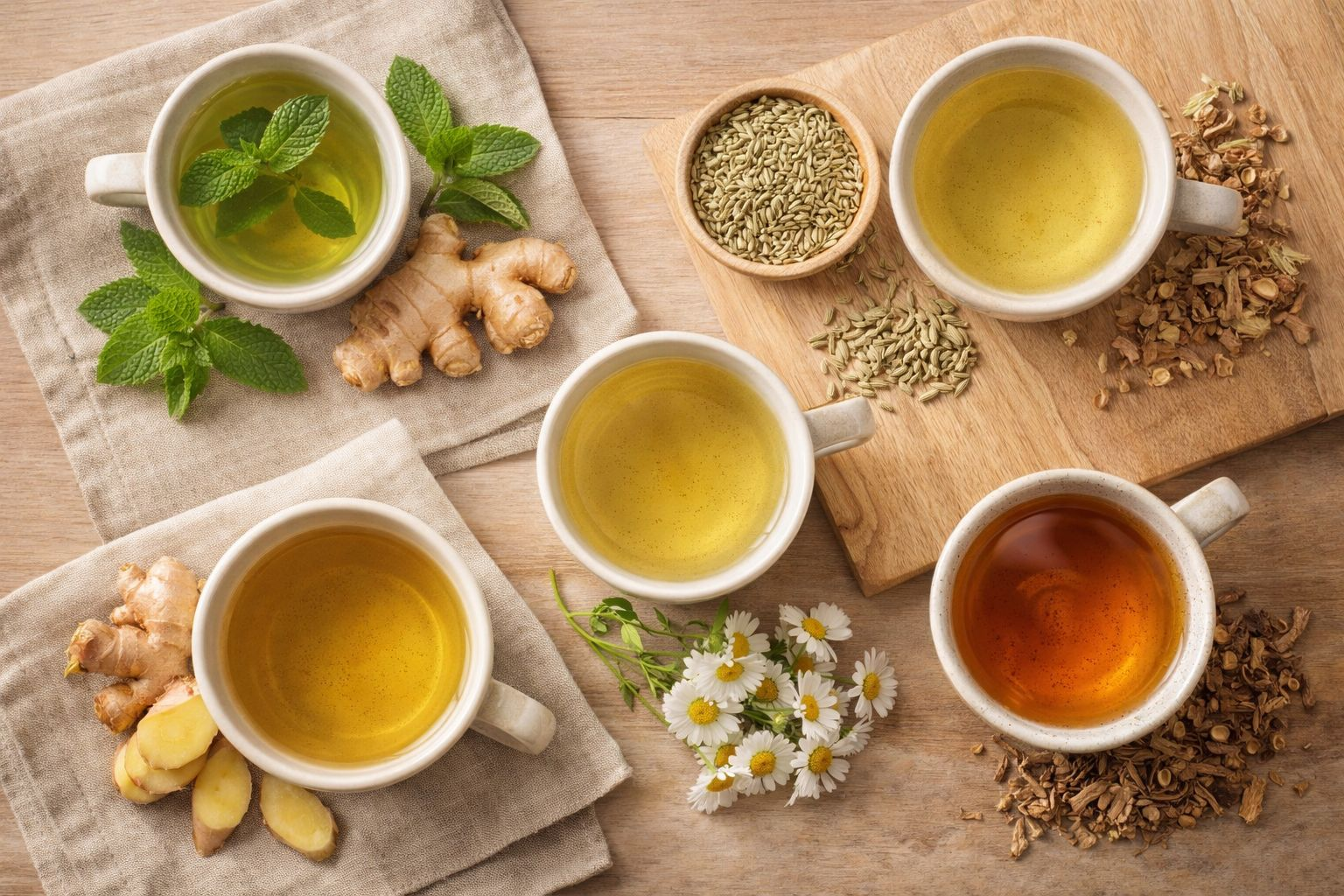
- Peppermint Tea – The Cool Healer
- Ginger Tea – The Fiery Warrior
- Fennel Tea – The Gentle Digestive Whisperer
- Chamomile Tea – The Peaceful Protector
- Dandelion Root Tea – The Detoxifier
- Bonus Tip: Blend Your Own Digestive Tea!
- Lifestyle Tips to Boost Herbal Tea Benefits
- 10 Frequently Asked Questions (FAQs)
- Conclusion: A Cup of Comfort in Every Sip
Everyone has felt it—the tight, uncomfortable swell of the stomach after a meal, the sluggish digestion that seems to halt everything, or the trapped air that refuses to budge. Bloating and indigestion aren’t just physical discomforts; they often come with embarrassment, fatigue, and frustration. But what if the solution isn’t in pills or antacids, but in something far more ancient and soothing—a warm cup of herbal tea?
Around the world, generations have turned to nature for digestive harmony. From grandmothers in the Mediterranean brewing chamomile to monks in the East sipping ginger infusions, herbal teas have been a time-tested remedy for bloating and poor digestion. This article explores the top 5 herbal teas that bring not just warmth to the body but comfort to the gut.
Let’s dive into their stories, benefits, and how you can sip your way to better digestive health.
Peppermint Tea – The Cool Healer

Origin Story:
Peppermint has long been treasured for its cooling effects and its use as a digestive tonic. The Greeks and Romans sipped it after feasts, believing it helped calm the stomach.
How It Works:
Peppermint tea contains menthol, a natural compound known for its antispasmodic properties. It relaxes the smooth muscles of the gastrointestinal tract, helping reduce cramps, bloating, and gas buildup.
Best Time to Drink:
After meals or whenever bloating strikes. Its fresh aroma also uplifts mood and eases tension.
Benefits:
- Relieves bloating and flatulence
- Eases indigestion and stomach cramps
- Helps with irritable bowel syndrome (IBS)
- Freshens breath and improves focus
How to Brew:
Steep 1 tablespoon of dried peppermint leaves or 1 peppermint tea bag in hot water for 5–7 minutes. Avoid adding sugar—it works best in its purest form.
Ginger Tea – The Fiery Warrior

Origin Story:
In Ayurvedic and Chinese medicine, ginger is hailed as a “universal medicine.” Ancient healers used it to “ignite the digestive fire,” known as Agni in Ayurveda.
How It Works:
Ginger contains gingerol and shogaol, compounds that stimulate saliva, bile, and gastric enzymes. This makes digestion more efficient while reducing bloating, nausea, and gas.
Best Time to Drink:
Before meals to awaken the gut or after heavy eating to ease bloating.
Benefits:
- Stimulates digestion
- Reduces gas and bloating
- Relieves nausea and motion sickness
- Improves absorption of nutrients
How to Brew:
Grate a 1-inch piece of fresh ginger into a cup of boiling water. Simmer for 10 minutes, strain, and add lemon or honey if desired.
Fennel Tea – The Gentle Digestive Whisperer

Origin Story:
Used by Egyptians, Greeks, and even referenced in Ayurvedic texts, fennel seeds were a common post-meal chew in many cultures for digestion and breath freshening.
How It Works:
Fennel contains volatile oils that relax gastrointestinal muscles and help expel trapped gas. Its carminative properties make it perfect for post-meal sipping.
Best Time to Drink:
Right after a meal or before bed for a calm belly.
Benefits:
- Alleviates gas and bloating
- Supports smooth bowel movements
- Relieves constipation and colic
- Acts as a natural breath freshener
How to Brew:
Crush 1–2 teaspoons of fennel seeds and steep in hot water for 10 minutes. Its slightly sweet, licorice-like flavour makes it naturally pleasant.
Chamomile Tea – The Peaceful Protector

Origin Story:
Chamomile was known as the “plant’s physician” in ancient England, believed to heal nearby plants. For humans, its gentle floral aroma has always brought calmness—both in mind and stomach.
How It Works:
Chamomile contains apigenin, an antioxidant that binds to certain brain receptors, promoting relaxation. It also soothes the stomach lining, reduces inflammation, and encourages proper digestion.
Best Time to Drink:
Before bedtime or during stressful digestive episodes.
Benefits:
- Calms the digestive tract
- Reduces acid reflux and heartburn
- Supports better sleep and anxiety relief
- Soothes stomach cramps
How to Brew:
Use dried chamomile flowers or a tea bag. Steep in hot water for 5–7 minutes. Avoid boiling, as it can destroy the delicate essential oils.
Dandelion Root Tea – The Detoxifier

Origin Story:
Often mistaken as a mere weed, dandelion has been used in Traditional Chinese Medicine and Native American healing for centuries. It’s known for its liver-boosting and digestive-supporting abilities.
How It Works:
Dandelion root stimulates bile production, which helps break down fats and support digestion. It also acts as a mild diuretic, reducing water retention and puffiness.
Best Time to Drink:
Midday or early evening, especially if feeling sluggish or bloated after meals.
Benefits:
- Promotes bile flow and fat digestion
- Detoxifies the liver
- Relieves bloating and constipation
- Acts as a mild laxative
How to Brew:
Use roasted dandelion root for a coffee-like flavour. Steep 1 teaspoon in hot water for 10 minutes. You can also blend it with cinnamon or ginger for extra warmth.
Bonus Tip: Blend Your Own Digestive Tea!
Create your own custom brew for maximum benefits:
- Ginger + Peppermint for post-meal relief
- Chamomile + Fennel for bedtime digestion
- Dandelion + Lemon for morning detox
Lifestyle Tips to Boost Herbal Tea Benefits
Pairing herbal teas with healthy habits amplifies their effects:
- Eat slowly to help digestion start in the mouth.
- Stay hydrated to help flush toxins and aid gut movement.
- Limit processed foods, which can trigger bloating.
- Exercise regularly to stimulate gut motility.
- Practice mindful eating to avoid overeating.
10 Frequently Asked Questions (FAQs)
1. What tea is best for digestion?
Peppermint and ginger teas are considered among the best for digestion. They relax the digestive tract and stimulate the production of digestive enzymes.
2. How can I relieve bloating naturally?
You can relieve bloating by sipping herbal teas like fennel, chamomile, and peppermint. Staying hydrated, avoiding carbonated drinks, and eating slowly also help.
3. Does herbal tea help with digestion?
Yes, herbal teas are natural remedies known to support digestion, relieve gas, and reduce bloating by relaxing gut muscles and stimulating digestive fluids.
4. How often should I drink herbal tea for bloating relief?
1–2 cups per day, especially after meals, is ideal. However, always observe how your body reacts and consult a doctor if you have chronic digestive issues.
5. Are there any side effects to drinking too much herbal tea?
Most herbal teas are safe in moderation. Overconsumption of strong teas (like ginger or dandelion) may cause acid reflux or upset stomach in sensitive individuals.
6. Can children drink herbal teas for digestion?
Mild teas like chamomile and fennel are usually safe for children. However, it’s best to consult a pediatrician before introducing any new remedy.
7. Can I use herbal teas alongside medication?
Yes, but consult your doctor or pharmacist to avoid any potential interactions—especially with dandelion or ginger if you’re on blood pressure or blood-thinning meds.
8. What’s the best time to drink herbal teas for digestion?
The best time is after meals to aid digestion, but chamomile is great before bed, and dandelion works well during detox routines in the morning or midday.
9. Can I add sweeteners or milk to herbal teas?
It’s best to avoid sweeteners or dairy in digestive teas, as they can sometimes cause more bloating. Opt for honey or lemon if you need flavour enhancement.
10. Which herbal tea is best for morning bloating?
Ginger or dandelion tea is ideal for morning bloating due to their metabolism-boosting and detoxifying effects.
Conclusion: A Cup of Comfort in Every Sip
In today’s fast-paced world, bloating and digestive issues are more common than ever. But sometimes, healing doesn’t come in the form of complex treatments. Sometimes, it’s as simple as a warm cup of tea, infused with the power of nature and centuries of wisdom.
So the next time your gut feels uneasy, skip the pharmacy aisle and head to your kitchen. Brew a cup, breathe deeply, and let nature do its gentle work.
Because when the gut feels good, everything feels better.