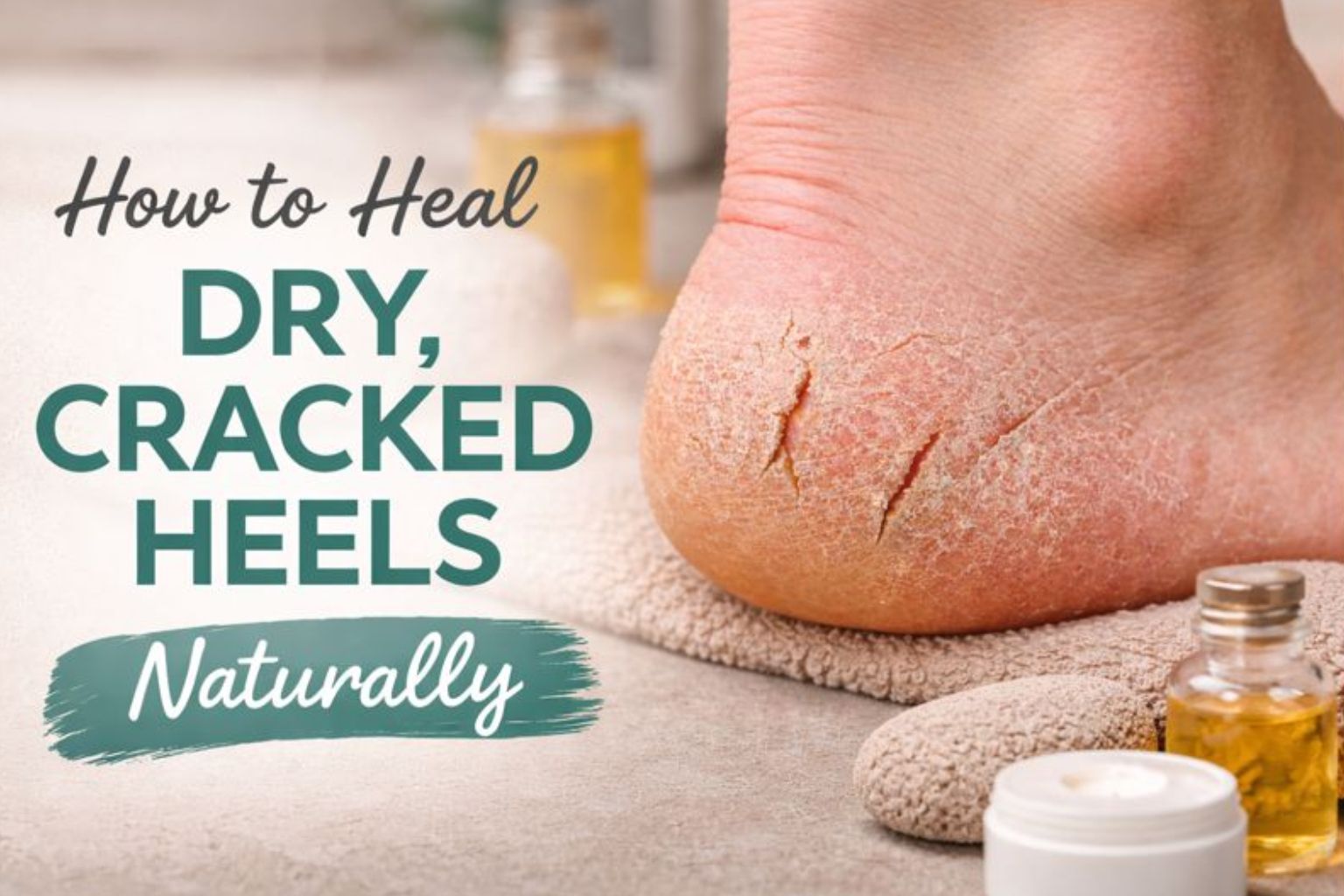
How to heal dry, cracked heels naturally is a question many people quietly search for after noticing rough skin, painful fissures, or persistent discomfort with every step. What often begins as mild dryness can gradually deepen into cracks that affect mobility, confidence, and overall foot health.
- Understanding Why Heels Become Dry and Cracked
- How Natural Remedies Support Heel Healing
- Soaking the Feet: Preparing the Skin for Healing
- Natural Oils That Help Restore Heel Softness
- Natural Humectants That Attract Moisture
- Gentle Exfoliation: Removing Barriers to Healing
- Overnight Care: Supporting Skin Repair During Rest
- Lifestyle Habits That Influence Heel Health
- When Natural Remedies Are Most Effective
- When Medical Guidance Is Necessary
- Conclusion
- Frequently Asked Questions (FAQs)
Dry, cracked heels are rarely the result of a single cause. They develop slowly—through daily habits, environmental exposure, and subtle changes in the skin’s ability to retain moisture. For many, the condition becomes noticeable only when the skin begins to split or ache, especially after standing or walking for long periods.
Natural remedies offer a gentle, supportive way to restore softness and resilience to heel skin. When combined with an understanding of why cracking occurs and how the skin heals itself, these approaches can help improve comfort and prevent recurrence—without harsh chemicals or aggressive treatments.
This article explores the science behind dry, cracked heels, how natural remedies support skin repair, and how simple daily practices can gradually restore foot health in a safe, evidence-aligned way.
Understanding Why Heels Become Dry and Cracked
The skin on the heels is structurally different from the skin on most other parts of the body. It is thicker, more rigid, and designed to withstand pressure. However, this strength comes at the cost of flexibility.
The Role of Skin Barrier Function
Healthy skin relies on a protective barrier made of lipids, proteins, and natural moisturizing factors. This barrier:
- Retains water within the skin
- Protects against environmental damage
- Maintains elasticity under pressure
When this barrier weakens, moisture escapes more rapidly. On the heels—where there are fewer oil glands—this moisture loss is even more pronounced.
Over time, dry skin loses elasticity. When body weight presses down during walking or standing, the skin stretches sideways. Without flexibility, the skin splits, forming cracks that can deepen if not addressed.
Common Contributors to Heel Cracking
Dry, cracked heels often develop due to a combination of factors rather than a single trigger:
- Prolonged standing on hard surfaces
- Walking barefoot or in open-back footwear
- Low-humidity environments
- Hot showers that strip natural oils
- Aging skin with reduced lipid production
- Mild dehydration
- Repeated friction or pressure
Understanding these contributors helps explain why natural remedies work best when paired with lifestyle adjustments rather than used in isolation.
How Natural Remedies Support Heel Healing
Natural remedies do not “force” the skin to heal. Instead, they create an environment that allows the skin’s natural repair mechanisms to function more efficiently.
Moisture Restoration
The most critical step in healing cracked heels is restoring and retaining moisture. Many natural substances act as occlusives or humectants, helping water remain in the outer skin layers.
Barrier Reinforcement
Certain plant oils and natural fats support the lipid matrix of the skin, improving elasticity and resistance to further cracking.
Gentle Exfoliation
Controlled exfoliation removes dead skin cells that block moisture penetration, allowing nourishing substances to reach healthier layers beneath.
When used consistently and gently, natural remedies support gradual improvement without disrupting the skin barrier.
Soaking the Feet: Preparing the Skin for Healing
Soaking the feet is often the first step in natural heel care, not because it cures dryness, but because it prepares the skin to absorb moisture more effectively.
Warm water softens the outer layer of hardened skin, making it more receptive to treatment. Adding natural ingredients can enhance this effect without irritation.
A short soak—typically 10 to 15 minutes—is sufficient. Prolonged soaking can have the opposite effect by drawing moisture out once the feet dry.
After soaking, gently pat the feet dry, leaving a slight dampness to help seal in hydration when applying moisturizers.
Natural Oils That Help Restore Heel Softness
Natural oils have been used for skin care across cultures for centuries, largely because of their compatibility with the skin’s lipid structure.
Coconut Oil
Coconut oil contains medium-chain fatty acids that help reduce water loss from the skin. Its semi-solid texture allows it to form a protective layer over cracked areas, supporting overnight repair.
When applied to damp skin before bed and covered with cotton socks, coconut oil helps soften thickened heel skin over time.
Olive Oil
Rich in oleic acid and antioxidants, olive oil improves skin flexibility. It penetrates more deeply than heavier occlusives, making it useful for maintaining softness during the day.
Olive oil works best when used sparingly, as excessive application can leave the skin slippery.
Castor Oil
Castor oil is thicker and more occlusive, making it particularly useful for deep cracks. It helps seal moisture into compromised skin, reducing further splitting.
Because of its density, castor oil is often mixed with lighter oils for easier application.
Natural Humectants That Attract Moisture
Humectants draw water into the skin, helping replenish hydration levels.
Honey
Honey naturally attracts moisture and helps maintain a hydrated skin environment. It also supports skin repair by reducing surface irritation and encouraging healthy tissue regeneration.
Applying a thin layer of honey to cracked heels for a short period before rinsing can help improve softness when used consistently.
Aloe Vera Gel
Aloe vera contains water, polysaccharides, and soothing compounds that help calm irritated skin. It hydrates without heaviness, making it suitable for daytime use.
Regular application can improve skin comfort and reduce the tight feeling often associated with heel dryness.
Gentle Exfoliation: Removing Barriers to Healing
Exfoliation plays a supportive role in natural heel care, but it must be approached carefully.
Over-exfoliation can worsen cracking by thinning already compromised skin. Gentle methods help remove dead cells without causing trauma.
Pumice Stone Use
A pumice stone used lightly after soaking helps smooth thickened areas. The goal is not to remove all roughness but to reduce buildup that prevents moisture absorption.
Exfoliation should be done no more than two to three times per week.
Natural Scrubs
Simple scrubs made from fine sugar or oatmeal combined with oil can gently loosen dead skin. These should be applied with minimal pressure and followed immediately by moisturizing.
Overnight Care: Supporting Skin Repair During Rest
Skin repair processes are more active during rest, making nighttime an ideal opportunity for heel care.
Applying a rich natural moisturizer before bed, then covering the feet with breathable socks, creates a humid micro-environment that supports healing.
This method reduces overnight moisture loss and allows active ingredients to remain in contact with the skin for extended periods.
Consistency is key. Gradual improvement typically becomes noticeable within one to two weeks of nightly care.
Lifestyle Habits That Influence Heel Health
Natural remedies work best when daily habits support skin health rather than undermine it.
Footwear Choices
Shoes that provide heel support reduce sideways pressure that contributes to cracking. Soft-soled footwear with closed backs helps distribute weight more evenly.
Hydration and Nutrition
Adequate water intake supports overall skin hydration. Nutrients such as essential fatty acids, zinc, and vitamins A and E play roles in skin repair and resilience.
Environmental Awareness
Dry indoor air can worsen heel dryness. Using a humidifier during colder months may help reduce overall moisture loss from the skin.
When Natural Remedies Are Most Effective
Natural approaches are particularly helpful when:
- Cracks are superficial
- There is no bleeding or infection
- Discomfort is mild to moderate
- Skin dryness is the primary issue
Early intervention prevents cracks from deepening and reduces the likelihood of complications.
When Medical Guidance Is Necessary
While natural remedies support general skin health, professional care is important if:
- Cracks bleed or become painful
- Signs of infection appear
- Healing does not improve after consistent care
- There is an underlying condition, such as diabetes
Seeking guidance ensures that more serious issues are addressed safely.
Conclusion
Learning how to heal dry, cracked heels naturally involves more than applying a single remedy. It requires understanding how heel skin functions, why it becomes dry, and how gentle, consistent care supports its natural repair processes.
Natural remedies—when used thoughtfully—can restore comfort, improve skin texture, and help prevent recurrence. Combined with supportive lifestyle habits and early attention, they offer a safe, effective path toward softer, healthier feet without unnecessary intervention.
Frequently Asked Questions (FAQs)
1. How long does it take to heal cracked heels naturally?
Healing time varies depending on severity and consistency of care. Mild cracks may improve within one to two weeks, while deeper cracks can take several weeks. Regular moisturizing, gentle exfoliation, and supportive footwear help speed gradual recovery without stressing the skin.
2. Can dry cracked heels heal without creams or oils?
While mild dryness may improve with lifestyle changes alone, most cracked heels benefit from topical moisture support. Natural oils and humectants help restore the skin barrier and reduce further moisture loss more effectively than lifestyle changes alone.
3. Is it safe to exfoliate cracked heels?
Gentle exfoliation is safe when cracks are superficial and not bleeding. Over-exfoliation can worsen damage. Soft tools used lightly after soaking help remove dead skin while preserving healthy tissue underneath.
4. Why do cracked heels keep coming back?
Recurring cracks often result from unresolved causes such as pressure, dry environments, or inadequate moisture retention. Without addressing these contributing factors, the skin continues to lose elasticity and split over time.
5. Can dehydration cause cracked heels?
Dehydration can contribute to overall skin dryness, including the heels. While it is rarely the sole cause, insufficient fluid intake can make existing dryness worse and slow skin repair processes.
6. Are natural remedies enough for deep heel cracks?
Natural remedies support healing but may not be sufficient for deep or painful cracks. In such cases, professional evaluation ensures proper treatment and prevents complications such as infection.
7. Does walking barefoot worsen cracked heels?
Walking barefoot increases pressure and friction on the heels, often worsening cracks. Supportive footwear helps reduce mechanical stress and supports healing by limiting skin stretching.
8. Can aging skin affect heel dryness?
As skin ages, natural oil production decreases, making dryness more common. This reduced lipid content weakens the skin barrier, increasing susceptibility to cracking, especially in weight-bearing areas like the heels.
9. Should cracked heels be covered after moisturizing?
Covering moisturized heels with breathable socks helps trap moisture and improve absorption. This method is particularly helpful overnight, when skin repair activity naturally increases.
10. When should a doctor be consulted for cracked heels?
Medical guidance is recommended if cracks bleed, become painful, show signs of infection, or fail to improve after consistent natural care. Underlying health conditions may require specialized treatment.
11. What is the fastest natural way to heal cracked heels?
Consistent overnight moisturizing on damp skin, plus gentle exfoliation 2–3 times weekly, usually improves softness fastest without irritating the barrier.
12. What deficiency causes cracked heels?
Cracking is usually from dryness and pressure, but low essential fatty acids, zinc, and vitamins A/E can affect skin resilience. Diet matters, but topical barrier care is still key.
13. Is Vaseline good for cracked heels?
Petroleum jelly is an occlusive that reduces water loss. It can help when applied to damp skin and covered with socks, but it doesn’t add moisture by itself.