
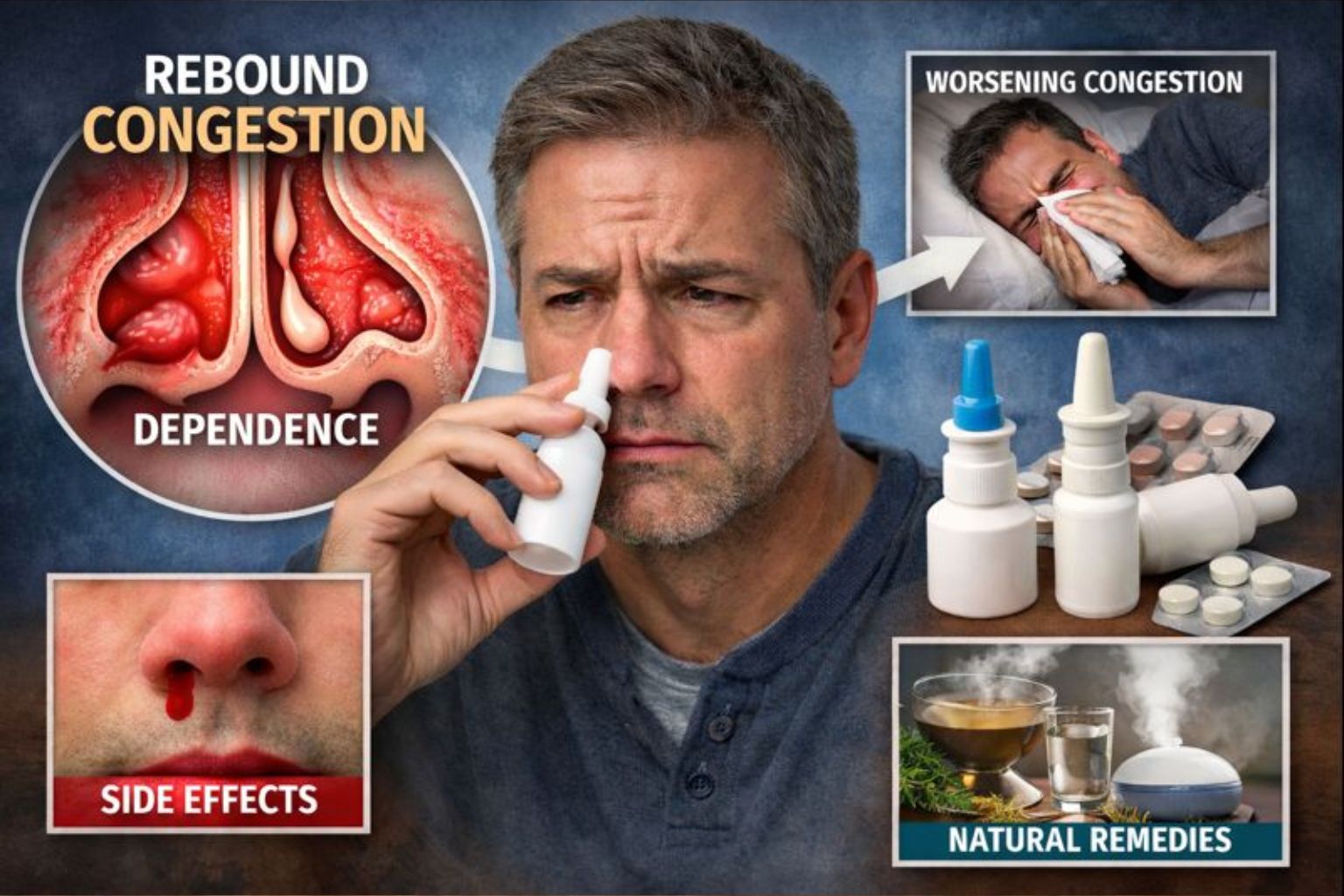
Nasal spray overuse can worsen congestion and cause dependence. Learn the hidden risks, symptoms, and safer ways to relieve a blocked nose naturally. Blocked noses are deceptively simple problems. A cold, seasonal allergies, dry air, or sinus pressure can turn normal breathing into an exhausting challenge. In those moments, nasal decongestant sprays feel like a small miracle—fast, effective, and easy. One spray, one deep breath, and relief returns almost instantly.
- Understanding Nasal Congestion: Why the Nose Gets Blocked
- How Nasal Decongestant Sprays Work
- The Slippery Slope: How Overuse Begins
- What Is Rebound Congestion?
- How Common Is Nasal Spray Dependence?
- Why Nasal Spray Overuse Feels So Hard to Stop
- Short-Term Side Effects of Overuse
- Long-Term Health Risks of Chronic Use
- Why Some People Are More Vulnerable
- The Psychological Side of Nasal Spray Dependence
- How to Safely Stop Using Nasal Decongestant Sprays
- Natural Ways to Support Nasal Recovery
- Prevention: Using Nasal Sprays Safely
- When to Seek Professional Help
- A Reassuring Perspective
- Frequently Asked Questions (FAQs)
But for millions of people, that quick relief quietly turns into a cycle that is far harder to escape.
Across the UK and beyond, health experts and pharmacists are increasingly concerned about the overuse of nasal decongestant sprays. Surveys and clinical observations suggest that many people unknowingly develop a form of dependence, where the spray that once helped now keeps the nose blocked unless it is used again. This condition, known medically as rebound congestion, is far more common than most people realize.
This article explores how nasal sprays work, why overuse happens, the physical and psychological toll it can take, and—most importantly—how to break the cycle safely and regain natural breathing without fear or panic.
Understanding Nasal Congestion: Why the Nose Gets Blocked
Nasal congestion is not caused by “extra mucus” alone. In most cases, the real culprit is inflammation.
Inside the nose, tiny blood vessels line the nasal passages. When the body reacts to a virus, allergen, irritant, or dry environment, these blood vessels swell. That swelling narrows the airways, making breathing feel difficult even if mucus is minimal.
Common triggers include:
- Viral infections such as colds and flu
- Allergies (hay fever, dust mites, pet dander)
- Sinus infections
- Dry indoor air, especially in winter
- Air pollution and smoke
- Overuse of nasal sprays themselves
When congestion persists, sleep suffers, concentration drops, and daily life becomes harder. It is no surprise that people reach for solutions that promise immediate relief.
How Nasal Decongestant Sprays Work
Most over-the-counter nasal decongestant sprays contain medications such as oxymetazoline or xylometazoline. These drugs work by constricting blood vessels in the nasal lining.
When the blood vessels shrink:
- Swelling reduces rapidly
- Airways open almost instantly
- Breathing feels clear within minutes
This rapid effect is why nasal sprays are so popular. Unlike tablets, they work locally and quickly, often within seconds.
However, this powerful action comes with an important limitation: they are designed for short-term use only, typically no more than three to five days.
The Slippery Slope: How Overuse Begins
Most people do not plan to overuse nasal sprays. The pattern usually develops quietly and unintentionally.
It often starts like this:
- A cold causes severe congestion
- A nasal spray provides dramatic relief
- Symptoms improve, but congestion returns
- The spray is used again “just one more time”
After several days, something changes. When the spray wears off, the congestion feels worse than before. The nose feels completely blocked, sometimes on both sides, creating anxiety and discomfort.
The person reaches for the spray again—not to feel better, but simply to feel normal.
This cycle is the hallmark of rebound congestion, also known as rhinitis medicamentosa.
What Is Rebound Congestion?
Rebound congestion occurs when nasal blood vessels become dependent on the spray to stay constricted.
Over time:
- Blood vessels stop responding normally
- The nasal lining becomes chronically inflamed
- Congestion returns faster and more intensely
- Relief lasts for shorter periods
Instead of healing, the nose remains trapped in a cycle of swelling and temporary relief.
Unlike substance addiction, this dependence is physiological rather than psychological—but the experience can feel just as distressing.
How Common Is Nasal Spray Dependence?
While exact numbers are difficult to track, recent reports and pharmacy surveys suggest that millions of people in Britain alone may be at risk of nasal spray overuse.
Pharmacists report that many customers:
- Use sprays daily for weeks or months
- Buy multiple bottles at a time
- Feel panicked at the idea of stopping
- Believe the spray is treating the condition, not causing it
Health professionals from organizations such as NHS continue to warn that nasal sprays are frequently misunderstood and misused, despite clear labeling.
Why Nasal Spray Overuse Feels So Hard to Stop
For many people, the fear of stopping is not exaggerated. The sensation of complete nasal blockage can feel suffocating, especially at night.
Several factors make quitting difficult:
1. Physical Dependence
The nasal tissue has adapted to the medication. Without it, swelling rebounds aggressively.
2. Sleep Disruption
Blocked breathing worsens at night, leading to poor sleep and fatigue.
3. Anxiety and Panic
Not being able to breathe freely through the nose can trigger anxiety, especially for people prone to panic attacks.
4. Misinterpretation of Symptoms
Many assume the congestion means the original illness is still present, rather than recognizing rebound congestion.
This combination can make people feel trapped—aware something is wrong, but unsure how to stop safely.
Short-Term Side Effects of Overuse
Even before dependence develops, frequent nasal spray use can cause noticeable side effects:
- Burning or stinging sensation
- Dryness and irritation
- Sneezing
- Nosebleeds
- Increased sensitivity inside the nose
These symptoms are often dismissed as minor, but they signal that the nasal lining is under stress.
Long-Term Health Risks of Chronic Use
When overuse continues for weeks or months, more serious problems can develop.
Chronic Nasal Inflammation
Persistent swelling can make normal breathing difficult even without the spray.
Damage to Nasal Tissue
Long-term constriction of blood vessels reduces oxygen delivery, potentially harming delicate tissues.
Reduced Effectiveness
The spray becomes less effective over time, requiring more frequent doses.
Sinus Complications
Chronic congestion can interfere with sinus drainage, increasing the risk of sinus infections.
In severe cases, structural damage to the nasal lining has been reported, although this is rare.
Why Some People Are More Vulnerable
Not everyone who uses nasal sprays develops dependence. Certain factors increase risk:
- Allergic rhinitis requiring frequent symptom control
- Chronic sinus issues
- Frequent colds
- Anxiety around breathing or sleep
- Lack of awareness about usage limits
People with ongoing nasal conditions may feel especially reliant on fast-acting solutions.
The Psychological Side of Nasal Spray Dependence
Although not classified as addiction in the traditional sense, nasal spray overuse can carry a strong emotional component.
People often describe:
- Fear of leaving home without the spray
- Panic when a bottle runs out
- Embarrassment about frequent use
- Frustration at failed attempts to stop
This emotional burden is real and deserves empathy. Understanding that the condition is common and reversible can reduce shame and fear.
How to Safely Stop Using Nasal Decongestant Sprays
Stopping abruptly can be uncomfortable, but it is possible—and recovery is expected.
Gradual Reduction
Some people reduce usage slowly, spacing doses further apart each day.
One-Nostril Method
Using the spray in only one nostril while allowing the other to recover can make breathing more tolerable during withdrawal.
Saline Sprays and Rinses
Saltwater sprays help moisturize nasal passages and support healing without causing rebound congestion.
Corticosteroid Nasal Sprays
Unlike decongestants, steroid sprays reduce inflammation and are safe for longer-term use under guidance.
Medical Support
Pharmacists and doctors can help create a personalized plan, especially for long-term users.
Most people notice improvement within one to two weeks, although full recovery may take longer.
Natural Ways to Support Nasal Recovery
While healing, gentle natural strategies can provide comfort:
- Steam inhalation to loosen mucus
- Humidifiers to prevent dryness
- Warm showers
- Adequate hydration
- Avoiding smoke and strong scents
These approaches do not replace medical treatment but can ease symptoms during recovery.
Prevention: Using Nasal Sprays Safely
Nasal sprays are not dangerous when used correctly. The key is informed use.
Safe practices include:
- Limiting use to three to five days
- Reading labels carefully
- Avoiding multiple decongestant products simultaneously
- Seeking advice if congestion persists
If symptoms last longer than a week, the underlying cause may require a different approach.
When to Seek Professional Help
Medical advice should be sought if:
- Nasal spray use exceeds one week
- Congestion worsens despite treatment
- Nosebleeds or pain occur
- Sleep is severely disrupted
Early guidance can prevent months of unnecessary discomfort.
A Reassuring Perspective
The most important message is this: nasal spray overuse is common, understandable, and reversible.
Millions of people have unknowingly fallen into the same pattern. With patience, support, and the right alternatives, the nose can recover and return to its natural balance.
Breathing freely without fear is possible again—and it does not require suffering in silence.
Frequently Asked Questions (FAQs)
1. Can nasal sprays really cause dependence?
Yes. Prolonged use can cause rebound congestion, where nasal tissue becomes dependent on the spray to stay open.
2. How long does rebound congestion last?
Symptoms usually improve within one to two weeks after stopping, though full recovery can take longer for chronic users.
3. Are all nasal sprays risky?
No. Saline sprays and steroid sprays do not cause rebound congestion when used correctly.
4. Why does congestion feel worse after stopping?
Blood vessels rebound and swell after prolonged constriction, temporarily worsening blockage.
5. Can children develop nasal spray dependence?
Yes, which is why strict adherence to usage guidelines is especially important for children.
6. Is it safe to stop nasal sprays suddenly?
It is safe but uncomfortable. Gradual reduction may feel more manageable for some people.
7. Can allergies increase the risk of overuse?
Yes. Ongoing allergy symptoms often lead to repeated spray use.
8. Do oral decongestants cause the same problem?
No rebound congestion, but oral decongestants have other potential side effects.
9. Can humidifiers help during recovery?
Yes. Moist air can reduce dryness and support the healing of nasal tissue.
10. When should I talk to a doctor?
If spray use lasts longer than a week or symptoms worsen, professional guidance is recommended.
Medical Disclaimer
The information provided in this article is for educational and informational purposes only and is not intended as medical advice. It should not be used to diagnose, treat, cure, or prevent any medical condition. Always consult a qualified healthcare professional, pharmacist, or physician before starting, stopping, or changing any medication or treatment.