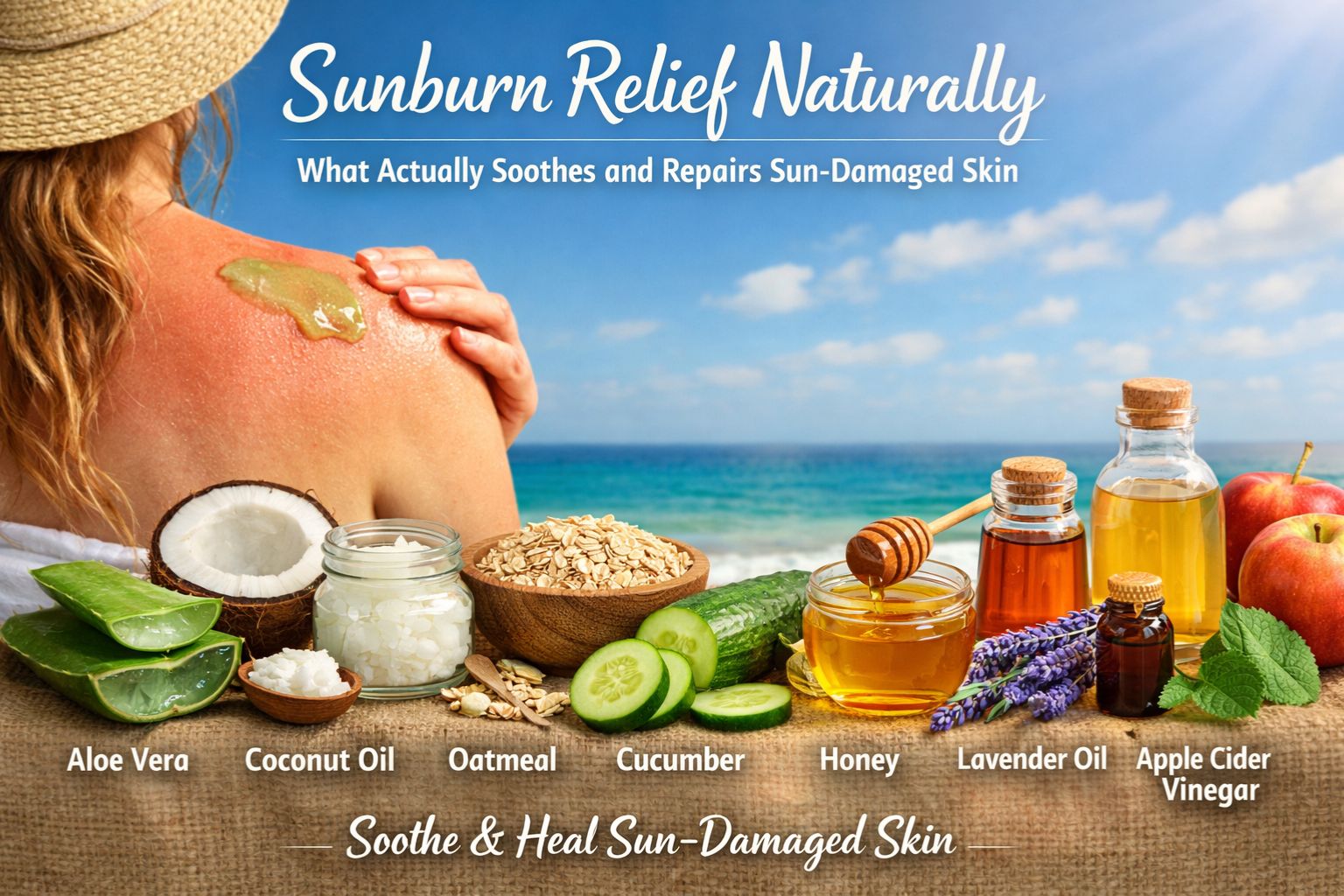
Sunburn relief naturally is a crucial topic for anyone who enjoys spending time outdoors but has experienced the discomfort of sun-damaged skin. Sunburn occurs when the skin is overexposed to ultraviolet (UV) rays, causing redness, pain, and sometimes peeling. While there are many ways to treat sunburn, using natural remedies can be an effective, soothing way to repair the skin without harsh chemicals. In this article, we will explore natural methods that help relieve sunburn, backed by both scientific research and real-world applications.
- Why Sunburn Happens: A Quick Overview
- 1. Aloe Vera: A Timeless Remedy for Sunburn
- 2. Coconut Oil: Hydrating and Healing
- 3. Oatmeal Baths: Soothing the Skin from the Inside Out
- 4. Cucumber: Cooling and Hydrating
- 5. Honey: Nature’s Healer
- 6. Lavender Oil: Calming the Skin and Mind
- 7. Apple Cider Vinegar: Restoring the Skin’s pH Balance
- Conclusion: Soothe, Heal, and Prevent
- FAQs
Sunburn is a painful reminder of the damage the sun’s rays can inflict on our skin. Whether it’s from a day at the beach, a hike in the mountains, or just a few hours under the sun, many of us have experienced the discomfort of overexposure. The good news is that nature offers several remedies to soothe and repair sun-damaged skin, helping to alleviate pain and promote healing.
In this article, we’ll explore natural ways to relieve sunburn, backed by both medical evidence and real-world practices. With proper care, your skin can recover, and you’ll learn how to integrate these remedies into your routine to support your skin’s health long-term. Let’s dive into how you can ease sunburn naturally, with an emphasis on scientifically-supported methods that prioritize safety and efficacy.
Why Sunburn Happens: A Quick Overview
To understand how sunburn remedies work, it’s essential to grasp the physiological process of sunburn. Sunburn occurs when your skin is overexposed to ultraviolet (UV) radiation, which causes inflammation, DNA damage, and the activation of the body’s defence mechanisms. This leads to redness, pain, and in more severe cases, blisters.
The main culprit behind sunburn is UVB radiation, which damages the skin’s outer layer. UVB rays cause the skin to produce more melanin, leading to a tan (a form of protection). However, when the skin is exposed for too long, this protection fails, and the skin becomes inflamed, resulting in the symptoms of sunburn.
Now, let’s take a look at natural remedies that help soothe and repair this skin damage.
1. Aloe Vera: A Timeless Remedy for Sunburn
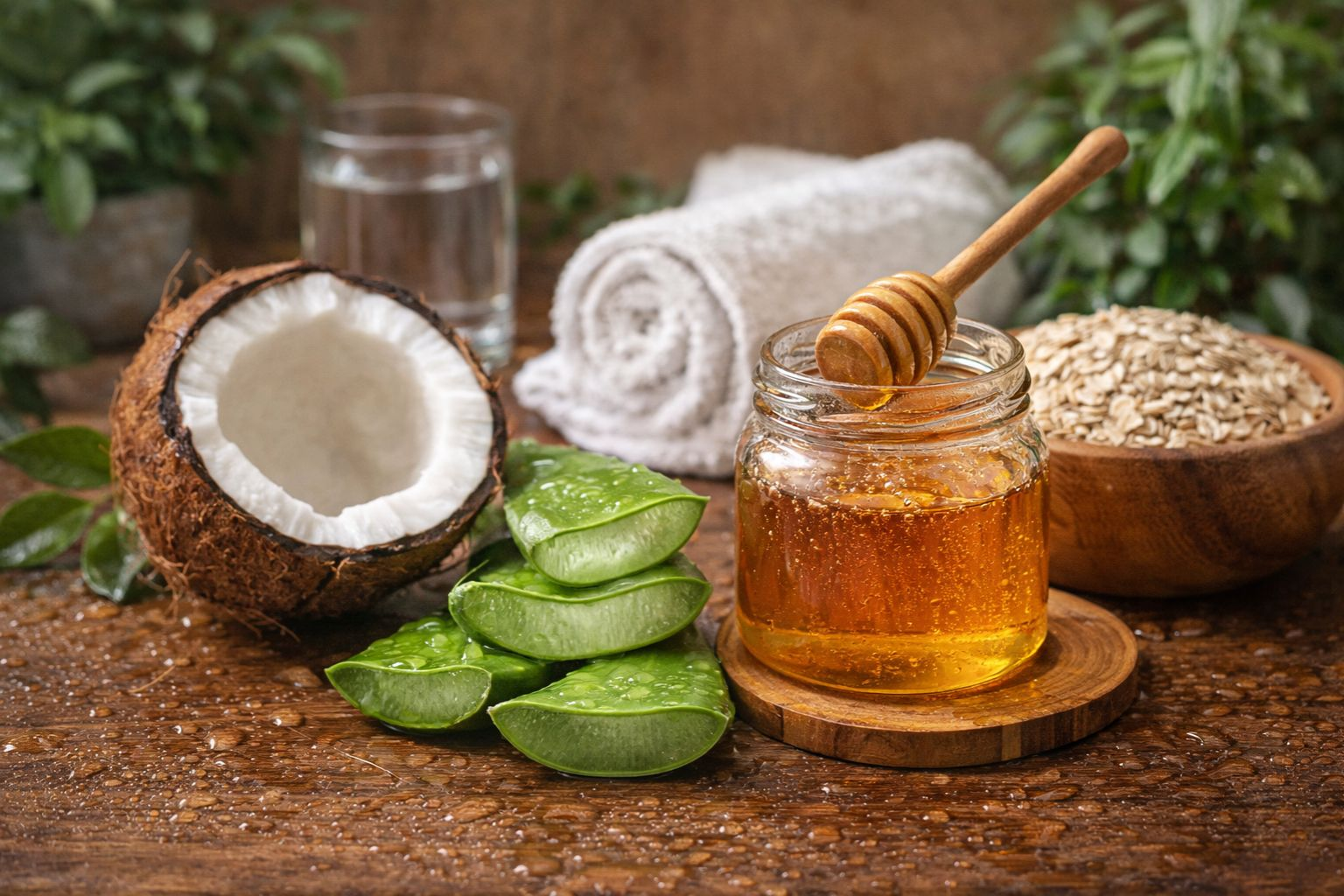
Aloe vera has long been celebrated as a natural sunburn remedy, and for good reason. This plant contains compounds that provide cooling relief, reduce inflammation, and promote the healing of damaged skin. Aloe vera gel contains antioxidants, enzymes, and vitamins that help nourish the skin while calming the discomfort caused by sun exposure.
How Aloe Vera Helps:
- Cooling effect: Aloe vera’s high water content helps hydrate the skin, while its cooling properties offer immediate relief from the burn.
- Anti-inflammatory: It reduces swelling and redness associated with sunburn by inhibiting the production of inflammatory molecules.
- Promotes healing: The gel stimulates collagen production, which is vital for skin repair.
How to Use:
- Apply fresh aloe vera gel directly to the affected area, or purchase a high-quality, pure aloe vera gel from the store.
- For maximum relief, store the gel in the refrigerator and apply it cool for an added soothing effect.
2. Coconut Oil: Hydrating and Healing
Coconut oil is not only a skin moisturizer but also a natural anti-inflammatory and antioxidant. It helps lock moisture into the skin and repair the skin barrier damaged by the sun’s rays.
How Coconut Oil Helps:
- Moisturizing: Sunburn can dry out the skin, and coconut oil helps prevent further dehydration by forming a barrier that retains moisture.
- Anti-inflammatory: The fatty acids in coconut oil reduce inflammation, which helps calm redness and discomfort.
- Antioxidant properties: Coconut oil contains vitamin E and other antioxidants, which can aid in the skin’s recovery by combating free radical damage caused by UV rays.
How to Use:
After your skin has cooled down from sun exposure, gently massage coconut oil into the affected areas. Avoid using it on broken skin or blisters.
3. Oatmeal Baths: Soothing the Skin from the Inside Out
Oatmeal is a well-known remedy for various skin conditions, including sunburn. It has anti-inflammatory and antioxidant properties, which make it an ideal treatment to relieve irritation and promote skin repair.
How Oatmeal Helps:
- Calms irritation: Oatmeal forms a protective barrier on the skin, reducing irritation and soothing itching, which is common in the later stages of sunburn.
- Restores moisture: Oatmeal helps restore moisture to the skin, making it softer and more supple.
- Anti-inflammatory: It reduces redness and inflammation caused by sunburn.
How to Use:
Add colloidal oatmeal (finely ground oatmeal) to a lukewarm bath and soak for 15–20 minutes. Pat your skin dry afterward and apply a moisturizer to lock in hydration.
4. Cucumber: Cooling and Hydrating
Cucumber is often found in skincare products, thanks to its cooling and hydrating properties. When applied to sunburned skin, it can provide immediate relief.
How Cucumber Helps:
- Cooling effect: Cucumber’s high water content helps rehydrate sunburned skin and provides a cool sensation upon contact.
- Anti-inflammatory: The antioxidants in cucumber reduce swelling and redness, making it a gentle yet effective treatment for sunburn.
How to Use:
Slice a chilled cucumber into thin slices and place them on the sunburned areas for 15–20 minutes. You can also blend cucumber into a paste and apply it directly to the skin.
5. Honey: Nature’s Healer
Honey has been used for centuries for its healing properties, and it’s no different when it comes to sunburn. Its natural antibacterial and anti-inflammatory properties make it an excellent remedy to support healing and reduce the risk of infection.
How Honey Helps:
- Antibacterial: Honey prevents infection by creating a barrier that keeps out harmful bacteria.
- Moisturizing: It hydrates the skin and helps lock in moisture to prevent peeling.
- Promotes healing: Honey accelerates the healing process by stimulating tissue regeneration.
How to Use:
Apply a thin layer of raw honey to the sunburned skin and leave it on for about 20 minutes before rinsing off with lukewarm water.
6. Lavender Oil: Calming the Skin and Mind
Lavender oil isn’t just for relaxation—it also offers several benefits for sunburn relief. Lavender has anti-inflammatory properties and helps calm the nervous system, which is helpful when dealing with painful sunburns.
How Lavender Oil Helps:
- Pain relief: Lavender oil’s soothing scent and properties can reduce the pain associated with sunburn.
- Anti-inflammatory: Lavender helps reduce redness and swelling, promoting faster healing.
- Promotes skin regeneration: Lavender aids in skin cell turnover, speeding up the healing process.
How to Use:
Mix a few drops of lavender essential oil with a carrier oil, such as coconut or olive oil, and gently massage it onto the sunburned areas.
7. Apple Cider Vinegar: Restoring the Skin’s pH Balance
Apple cider vinegar (ACV) is another natural remedy that’s commonly used for sunburn. Its acidity helps restore the skin’s pH balance, while its astringent properties provide relief from pain and discomfort.
How Apple Cider Vinegar Helps:
- Restores pH balance: Sunburn can disrupt the skin’s natural pH, and ACV helps restore it, promoting healing.
- Soothes pain: ACV has cooling and pain-relieving properties that make it effective against sunburn discomfort.
- Antiseptic: ACV can help prevent infection in cases where the skin is peeling or broken.
How to Use:
Dilute apple cider vinegar with water (1:1 ratio) and apply it with a cotton ball to the affected areas.
Conclusion: Soothe, Heal, and Prevent
While sunburn can be painful, natural remedies offer effective ways to alleviate the discomfort and support skin repair. From the cooling effects of aloe vera and cucumber to the moisturizing properties of honey and coconut oil, these remedies not only provide immediate relief but also help to prevent further damage as the skin heals.
It’s important to remember that while natural remedies are beneficial, they should complement other protective measures, such as staying hydrated and wearing sunscreen. For severe sunburns or cases with blisters, it’s crucial to seek medical attention. Above all, prevention is key—taking proactive steps to protect your skin from UV damage is the best way to avoid the need for sunburn relief in the first place.
FAQs
1. How does aloe vera help with sunburn?
Aloe vera helps by cooling the skin, reducing inflammation, and promoting healing with its anti-inflammatory and antioxidant properties.
2. Can coconut oil heal sunburn?
Coconut oil helps by moisturizing the skin, reducing inflammation, and providing antioxidants to support healing.
3. How often should I apply aloe vera to a sunburn?
Apply aloe vera gel to sunburned skin several times a day for continuous relief, especially after showering or swimming.
4. Is honey good for sunburn?
Yes, honey has antibacterial and moisturizing properties, which help prevent infection and hydrate the skin to aid in healing.
5. How can I prevent sunburn?
Prevention includes using sunscreen with at least SPF 30, wearing protective clothing, and avoiding direct sun exposure during peak hours (10 a.m. to 4 p.m.).
6. When should I seek medical help for sunburn?
Seek medical attention if you experience severe blistering, dizziness, fever, or nausea after sunburn, as this may indicate a more serious burn.
7. Can I use apple cider vinegar for sunburn?
Yes, diluted apple cider vinegar can help restore the skin’s pH and soothe pain, but it should be used with caution on sensitive skin.
8. How long does it take for sunburn to heal?
Mild sunburns typically heal within 3 to 5 days, while more severe burns may take up to two weeks to fully heal.
9. Does a cucumber help with sunburn?
Yes, cucumber’s cooling effect and high water content help soothe sunburned skin and reduce redness and swelling.
10. Can I prevent peeling after sunburn?
While peeling is part of the healing process, keeping the skin moisturized and hydrated can help reduce excessive dryness and flaking.