Skin infections are a common concern, ranging from minor irritations to conditions that require careful management. They can result from bacteria, viruses, fungi, or other pathogens that disrupt the skin’s natural barrier. While some infections may require medical attention, many mild cases can be managed at home using natural treatments that promote healing, reduce inflammation, and prevent complications.
Health-conscious readers often seek safe, effective, and natural remedies for skin infections that support overall skin health. Understanding the causes, early signs, and preventive strategies is key to minimizing discomfort and ensuring rapid recovery.
Understanding Skin Infections
Skin infections occur when harmful microorganisms invade the skin. Common types include:
- Bacterial infections: Examples include impetigo, cellulitis, and folliculitis.
- Fungal infections: Ringworm, athlete’s foot, and yeast infections.
- Viral infections: Herpes simplex and warts.
How Infections Develop
The skin is the body’s first line of defence. When this barrier is compromised—through cuts, scratches, burns, or excessive moisture—microorganisms can penetrate and multiply, causing redness, swelling, pain, and sometimes pus formation.
Contributing factors include:
- Poor hygiene or unclean environments
- Excessive moisture or sweating
- Chronic skin conditions like eczema
- Immune system weakness
- Friction from clothing or sports equipment
Recognizing early signs, such as redness, warmth, tenderness, or unusual discharge, allows for prompt intervention and reduces the risk of spreading.
Natural Treatments for Skin Infections
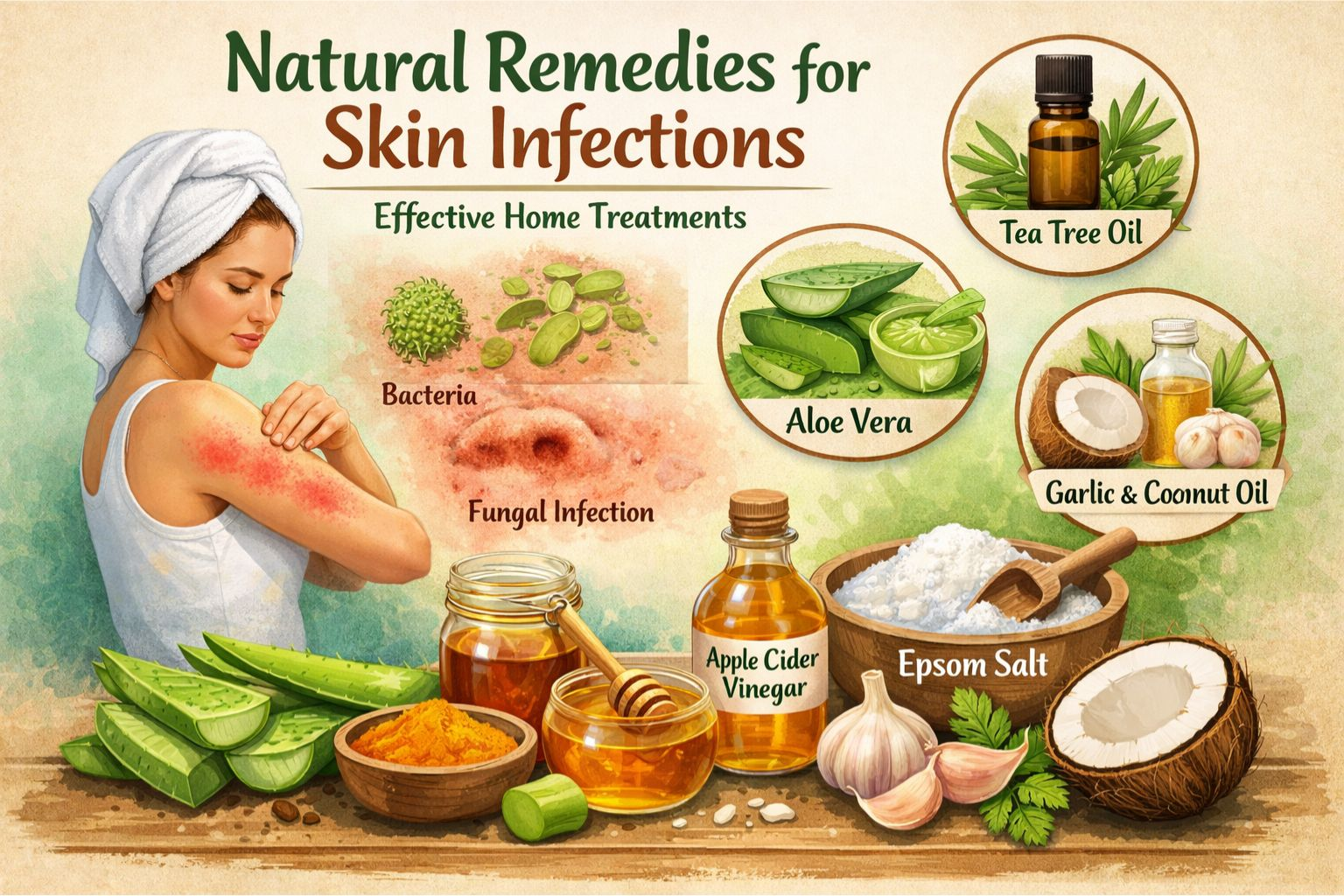
Natural remedies can support the body’s healing processes, reduce inflammation, and prevent the infection from worsening. Below are some of the most effective options:
1. Tea Tree Oil – Antimicrobial Power
Tea tree oil is a well-researched essential oil known for its antibacterial, antifungal, and antiviral properties. It can inhibit the growth of many pathogens that cause skin infections.
How to use:
- Dilute 1–2 drops of tea tree oil in a teaspoon of carrier oil (like coconut or jojoba).
- Apply gently to the affected area 1–2 times daily.
- Avoid using undiluted tea tree oil directly on the skin to prevent irritation.
Benefits:
- Reduces inflammation and redness
- Helps control bacterial and fungal growth
- Promotes faster healing of minor cuts and abrasions
2. Honey – Nature’s Healing Agent
Raw honey, particularly Manuka honey, has natural antibacterial properties and supports wound healing. Its high sugar content creates an environment that inhibits microbial growth.
How to use:
- Apply a thin layer of raw honey directly to the infected area.
- Cover with a clean bandage and leave for several hours or overnight.
Benefits:
- Reduces infection risk
- Moisturizes and protects the skin
- Supports tissue repair and regeneration
3. Aloe Vera – Soothing and Anti-inflammatory
Aloe vera is a versatile natural remedy with antimicrobial and anti-inflammatory properties, making it ideal for minor skin infections or irritations.
How to use:
- Apply fresh aloe vera gel directly from the leaf onto the affected area.
- Repeat 2–3 times daily.
Benefits:
- Soothes irritation and redness
- Supports skin barrier repair
- Provides gentle hydration
4. Garlic – Natural Antibiotic
Garlic contains allicin, a compound with potent antimicrobial properties. It may help inhibit bacterial and fungal growth on the skin.
How to use:
- Crush a fresh garlic clove and mix with a carrier oil.
- Apply lightly to the infected skin for 5–10 minutes.
- Rinse thoroughly; do not leave garlic on the skin too long to prevent irritation.
Benefits:
- Fights microbial infection
- Boosts localized immunity
- Reduces inflammation
5. Coconut Oil – Barrier Protection
Coconut oil contains lauric acid, which has antimicrobial effects and forms a protective barrier over the skin, reducing moisture loss.
How to use:
- Apply a thin layer to clean, dry skin.
- Use 1–2 times daily or as needed.
Benefits:
- Supports skin repair
- Prevents secondary infections
- Keeps skin hydrated
6. Turmeric – Anti-inflammatory Healing
Turmeric’s active compound, curcumin, has antimicrobial and anti-inflammatory effects, making it useful for minor infections and irritation.
How to use:
- Mix turmeric powder with water or coconut oil to form a paste.
- Apply to the infected area for 15–20 minutes.
- Rinse gently with warm water.
Benefits:
- Reduces swelling and redness
- Supports wound healing
- Prevents microbial growth
7. Proper Hygiene – First Line of Defence
Maintaining cleanliness is critical to preventing and managing skin infections:
- Wash your hands before touching wounds
- Clean affected areas gently with mild soap and water
- Keep wounds dry and covered
- Avoid sharing towels, razors, or personal items
Good hygiene supports all-natural remedies and prevents infections from worsening or spreading.
8. Dietary Support for Skin Health
Nutrition can play a crucial role in skin healing and infection prevention:
Key nutrients:
- Vitamin C: Supports collagen synthesis and immune defence
- Zinc: Promotes wound healing and immune function
- Protein: Essential for tissue repair
- Probiotics: Support overall immunity and skin microbiome
Including fruits, vegetables, lean proteins, and fermented foods enhances recovery from skin infections.
9. When to Seek Medical Attention
While mild infections may respond well to natural remedies, professional care is necessary if you notice:
Rapidly spreading redness or swelling
Pus-filled wounds or abscesses
Fever or systemic symptoms
Persistent or recurring infections
Early intervention with medical treatment prevents complications, particularly for bacterial or deep tissue infections.
FAQs: Natural Remedies for Skin Infections
1. What are natural remedies for skin infections?
Effective natural remedies include tea tree oil, honey, aloe vera, garlic, turmeric, and coconut oil. These help reduce microbial growth, inflammation, and support wound healing when applied appropriately.
2. How can I treat a skin infection at home?
Clean the affected area gently, keep it dry, and apply natural antimicrobial agents such as diluted tea tree oil or honey. Maintain proper hygiene, and monitor for worsening signs.
3. Does tea tree oil help with skin infections?
Yes, tea tree oil has antibacterial, antifungal, and antiviral properties. When diluted, it can help control infections, reduce inflammation, and promote healing.
4. Can honey prevent infections?
Raw or Manuka honey forms a protective barrier, inhibits microbial growth, and accelerates tissue repair, making it an effective preventive and therapeutic option.
5. How often should I apply natural remedies?
Most topical natural remedies can be applied 1–2 times daily, depending on tolerance and severity of infection. Avoid overuse to prevent irritation.
6. Can diet affect skin infection healing?
Yes, a nutrient-rich diet with vitamins C, zinc, protein, and probiotics supports immunity and tissue repair, aiding faster recovery from skin infections.
7. Is coconut oil safe for all skin types?
Coconut oil is generally safe for most people, but those prone to acne or sensitivity should test on a small area first.
8. Can turmeric be applied directly to the skin?
Yes, turmeric paste can be applied topically. Always rinse after 15–20 minutes to prevent staining or irritation.
9. How long does it take for skin infections to heal naturally?
Mild infections may improve within a few days to a week with proper care. Severe infections may take longer and require professional treatment.
10. When should I see a doctor for a skin infection?
Seek medical attention if the infection spreads rapidly, causes pus, fever, or pain, or does not improve after a few days of home care.
Final Thoughts
Natural remedies can be highly effective for treating minor skin infections, supporting wound healing, reducing inflammation, and preventing recurrence. Combining topical treatments, proper hygiene, and dietary support provides a comprehensive approach to skin health.
However, natural treatments work best when applied early, consistently, and safely. Severe infections or persistent conditions should always be evaluated by a healthcare professional to avoid complications and ensure complete recovery.